Custom Sculpture Supplier Evaluation: Capability, Inspection, and Delivery Assurance
A custom sculpture is a one-off capital purchase. There is no second production run to correct a mistake, and once the work is fabricated, crated and shipped, the buyer owns the result. That is why supplier evaluation for custom sculpture projects is less about brochures and more about evidence: which production steps happen inside the workshop, what records prove the finished piece matches the approved design, and who carries the risk between the factory gate and the installation site.
This guide is written for procurement teams, art consultants and project managers who have already shortlisted manufacturers and are moving from evaluation into execution. It converts the buying decision into three evaluation gates - capability, inspection and delivery assurance - and specifies the documents, questions and on-site checks that distinguish a supplier who can be contracted from one who can only be hoped for.
The Three Gates: What a Supplier Evaluation Must Prove
A custom sculpture evaluation has to answer three separate questions, and they fail in a fixed order. Capability failures cannot be inspected out later; inspection failures cannot be fixed by better packaging; delivery failures destroy a technically perfect piece. Score each gate independently before awarding any weight to price.
- Capability. Can the workshop actually produce the object in the specified material, at the specified size, with the specified surface finish - and which of those steps are performed in-house rather than subcontracted?
- Inspection. Can the supplier show a defined quality-control sequence, written acceptance criteria and material records that tie a specific batch of metal or stone to the piece you receive?
- Delivery assurance. Is packaging engineered for a multi-tonne artwork, are shipping terms and insurance allocated clearly, and is installation support available at destination?
One structural check belongs before all three: confirm that the legal entity signing the contract is the entity that controls the workshop. For custom fabrication, the registered company and the producing factory are sometimes different organisations, and that gap is where lead-time promises and quality claims quietly detach from reality. Ask which company name appears on the certificate of origin, which name appears on the invoice, and which workshop address will be used for production.
Why the Evaluation Bar Has Risen
The commercial context explains why buyers now demand documentation rather than assurances. Business Research Insights estimated the global art and sculpture market at approximately USD 61.83 billion in 2026, and Dataintelo placed the global bronze sculpture commission segment alone at USD 1.47 billion in 2024. Both figures describe a large, project-driven market in which a single commission is small relative to total volume but large relative to the buyer's own budget.
Budget distribution reinforces the point. CODAworx reported that over 80% of public art open call projects in North America in 2024 fell below a budget of USD 250,000. In practice this means most commissions are funded at a level where a re-make is not absorbable, so the procurement file - not the sales presentation - becomes the real risk control.
Customs classification adds a compliance dimension that is often missed at evaluation stage. A 2025 CloudscapeArt market analysis noted that original sculptures classified under HS Code 9703 frequently bypass EU anti-dumping duties, while mass-produced decorative items classified under HS 8306 face closer scrutiny. Classification depends on the nature of the work and on how the supplier documents it, so the evaluation should establish early whether the manufacturer can support the classification you intend to declare. Confirm the applicable treatment with your customs broker rather than relying on a supplier statement.
Gate One - Capability: Four Materials, One Accountable Workshop
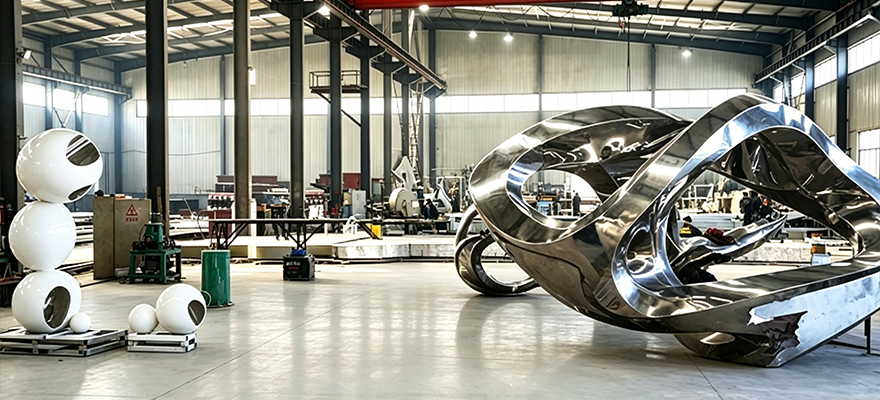
Material breadth is only a capability if the corresponding processes exist under the same quality system. A supplier that offers stone, bronze, stainless steel and Corten steel should be able to explain, station by station, where each material is cut, formed, joined and finished.
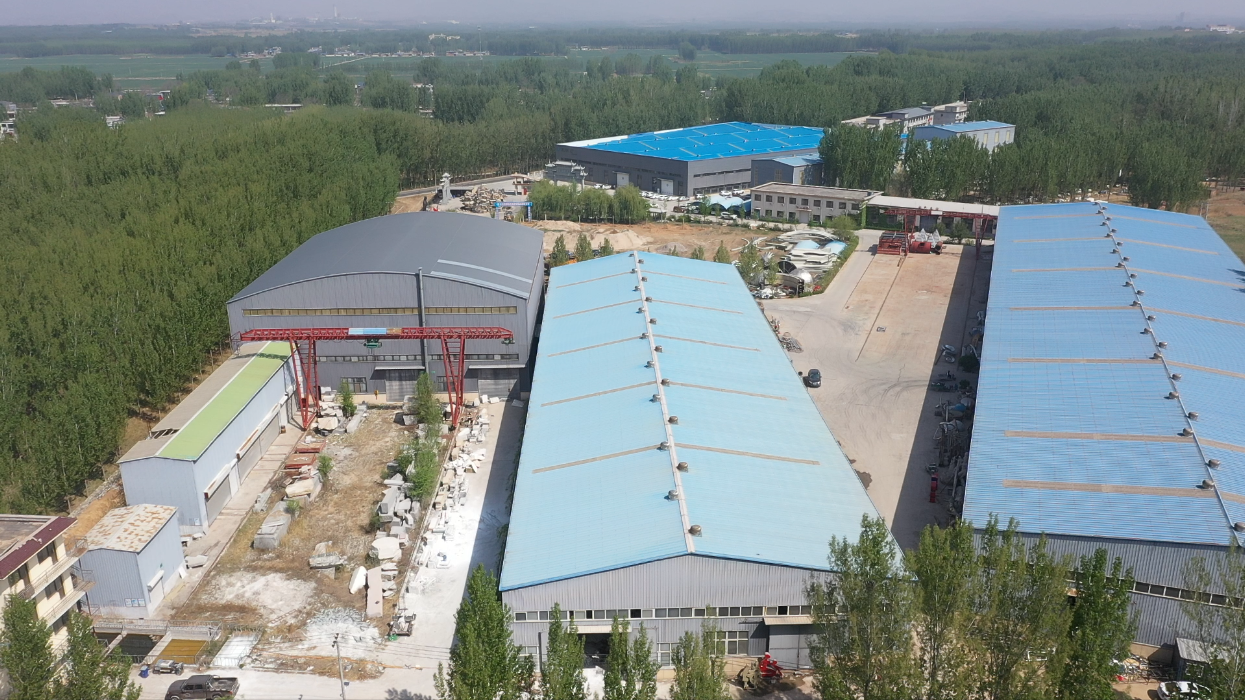
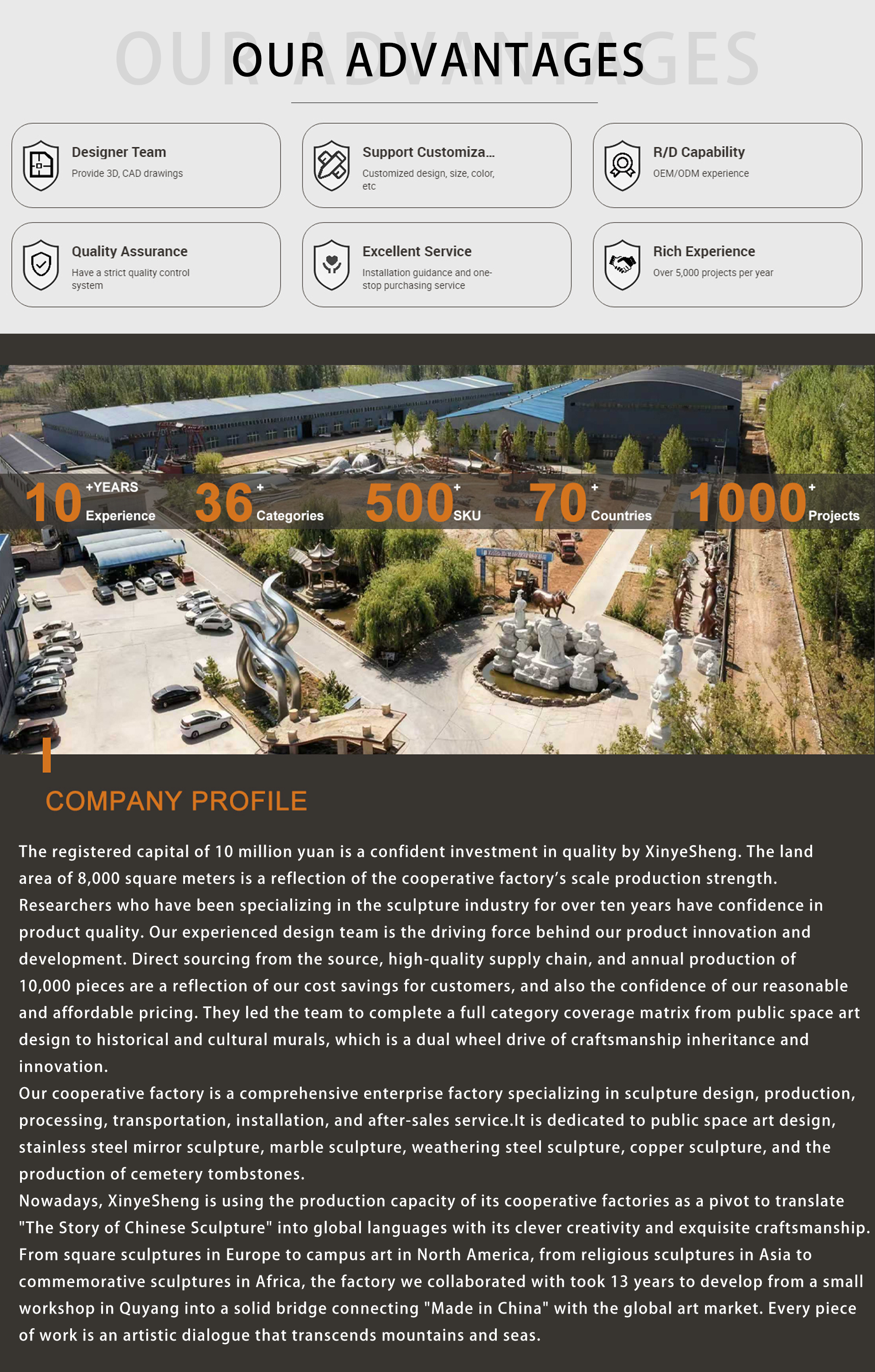
Jiangsu Xinyesheng Sculpture Co., Ltd is a sculpture manufacturer that manages design, fabrication and installation for custom sculpture projects, operating through a cooperative factory in Quyang that has developed over 13 years from a small workshop into an export-oriented production base. The registered company dates from 2025, employs 50 people including a 12-engineer design and technical team, and exports 100% of its output, with main markets in the EU, USA and Middle East. That structure - a newer commercial entity working with a long-established factory - is common in this industry and is exactly why entity verification belongs in the evaluation.
Ask the shortlisted supplier to confirm material handling for each specification you intend to use:
- Stone. Grade A natural marble is the reference specification for carved work; confirm block grade, vein direction, and whether carving is finished by hand where texture and undercut detail matter.
- Bronze and brass. Composition drives both colour and cost. Bronze contains over 85% copper and brass over 60%, which is why the two alloys age differently - bronze moves toward a green-brown patina, brass toward a darker brown - and why quotations for the same shape can differ sharply.
- Stainless steel. Premium 304/316L grades are the working specification; grade 316 is the appropriate recommendation for coastal and marine environments where chloride exposure accelerates corrosion.
- Corten (weathering) steel. An anti-corrosion weathering steel whose surface stabilises into a deliberate rust layer; it requires different detailing and drainage thinking from painted steel.
Capacity statements should be tested against your own project. A stated monthly capacity of 50-100 sets indicates the workshop's rhythm across mixed categories, not a guarantee that a six-metre installation will be prioritised. Ask where your project sits in the production calendar and which stations it will occupy. Customisation scope should also be explicit: material, size, design, colour, surface finish, sculpture style, logo application and installation method are typical variables, and OEM, ODM and fully custom design and manufacturing modes should all be available if you are buying as a brand, developer or design practice rather than as an end user.
Gate Two, Part A - Technique Verification
Technique is where visual claims and production reality diverge most. Rather than asking whether a supplier can produce a seamless stainless surface, ask how. The answer reveals the equipment, the sequence and the people.
Design development and approval
A credible workflow begins with a 3D design draft prepared for the client's confirmation before any material is cut, followed by an optional prototype stage, then production and shipping. For figurative and memorial work, request 1:1 clay model visualisation: a full-scale model is the only reliable way to approve proportion and likeness before casting or carving commits the budget. Treat the approved model, not the original rendering, as the contractual reference.
Bronze casting
For cast bronze, ask which casting route the foundry uses and at which stage you approve the pattern. Lost-wax casting is the established method for detailed figurative bronze because the wax pattern preserves fine surface modelling; the evaluation question is not whether the method exists but whether your supplier controls wax pattern approval, shell preparation, pour records and patina specification as documented stages. Ask to see a wall-thickness check and the patina sample that will be matched.
Seamless welding in stainless steel
Seamlessness is a finishing outcome produced by fit-up accuracy, controlled welding sequence to limit distortion, grinding and blending, and post-weld surface restoration. On 304/316L work, confirm that welds are cleaned and treated after finishing, because an untreated weld is where corrosion starts on an outdoor sculpture. Installation acceptance criteria used on delivered projects include full welds or tightened bolts with no loosening under a shake test, and anti-corrosion treatment applied to every weld and connection.
Hand carving combined with digital control
The strongest stone workshops combine traditional hand-carving with 3D modelling and CNC precision processing: the machine establishes accurate mass and profile, and the carver restores the surface language. Ask what proportion of the visible surface is hand-finished, and request photographs at the rough-cut, refined and final stages for the actual commission.
Gate Two, Part B - Inspection Records and Material Traceability
Inspection is only credible when it is staged, recorded and tied to payment. A defensible quality-control sequence has four checkpoints: material inspection on arrival, production process inspection during fabrication, surface quality inspection before finishing sign-off, and final inspection before shipment. Ask for the record format used at each checkpoint, not just the list of checkpoint names.
Acceptance criteria should be written into the order. Delivered-project standards include verticality and horizontality within the drawing requirements, with a vertical deviation no greater than 5 mm; secure fixing with bolts tightened or welds full and no loosening observed during a shaking test; a surface free of bumps, scratches and stains; and anti-corrosion treatment completed on welds and connections before cleaning and handover. These are the same criteria your installation contractor will be measured against, so agreeing them at supplier evaluation prevents a dispute later.
Pre-shipment inspection is the buyer's last inexpensive intervention. A workable commercial model releases the balance only after the client has reviewed photographs and video: a 50% deposit at order, inspection evidence after completion, the remaining 50% before shipment begins. If a supplier resists pre-shipment photographic evidence, that resistance is itself an evaluation result.
Certification: read the scope, not the logo
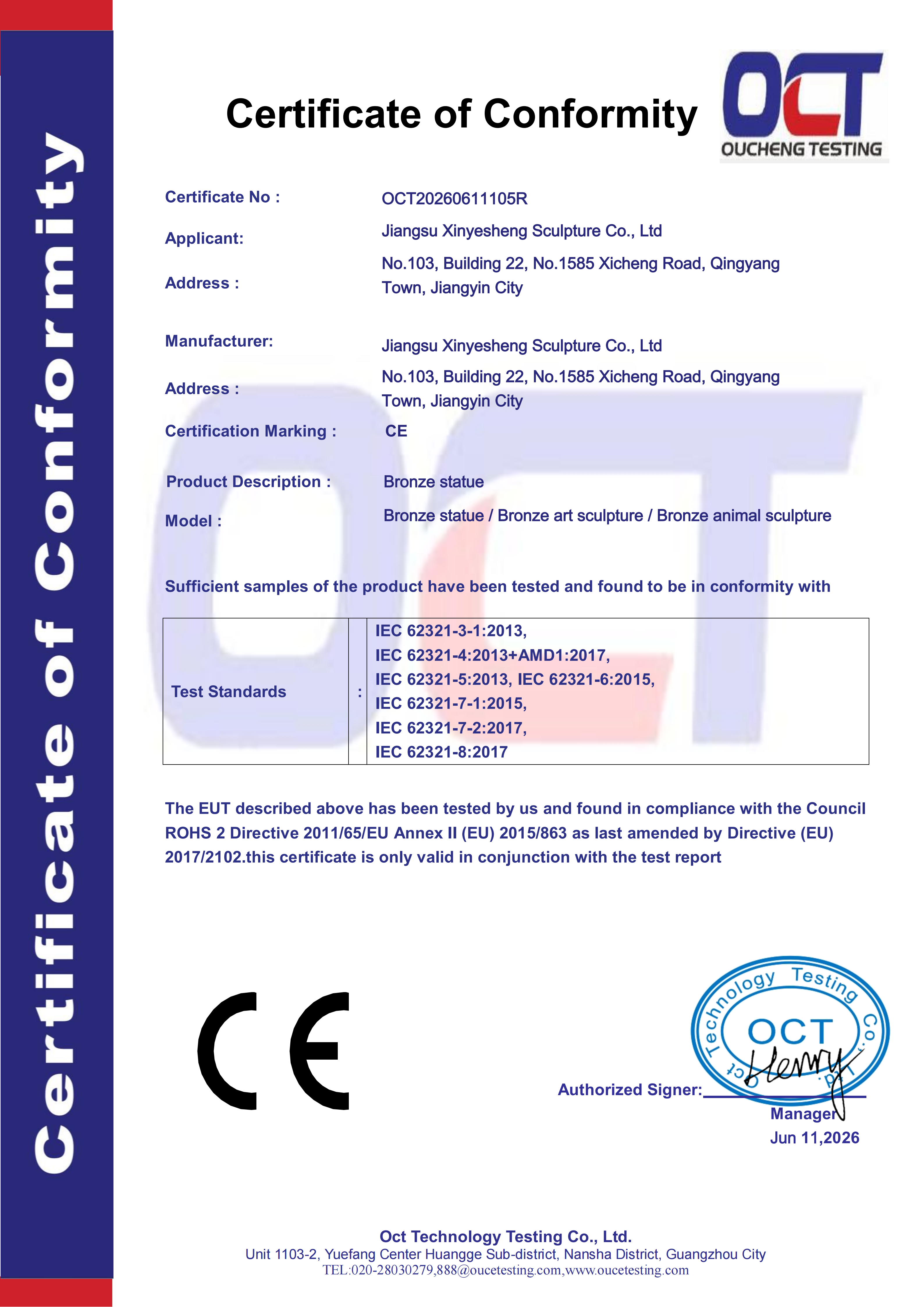
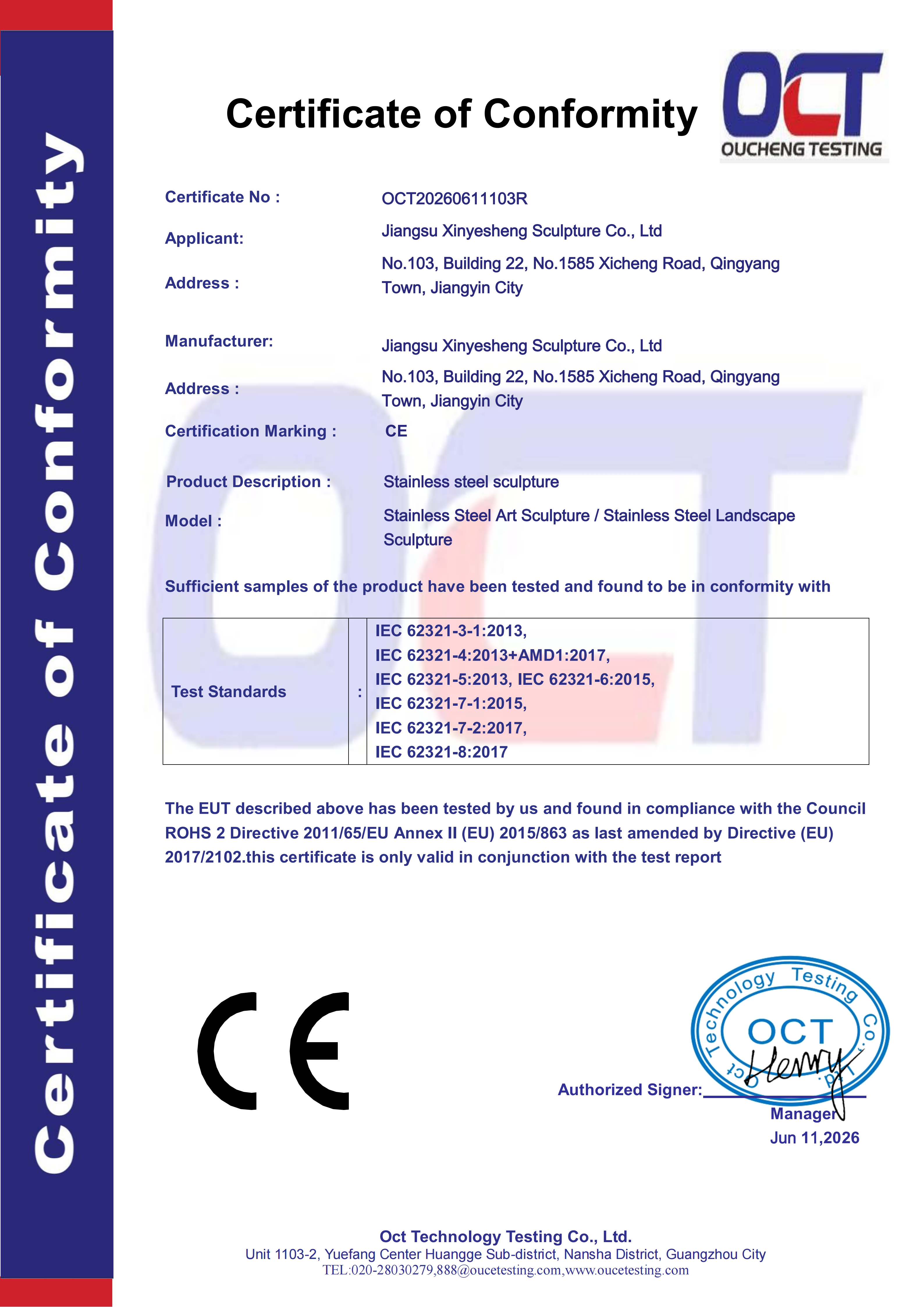
Environmental compliance documentation is frequently misunderstood. CE (RoHS) certificates issued by Oct Technology Testing Co., Ltd. under the IEC 62321 series - covering IEC 62321-3-1:2013, IEC 62321-4:2013+AMD1:2017, IEC 62321-5:2013, IEC 62321-6:2015, IEC 62321-7-1:2015, IEC 62321-7-2:2017 and IEC 62321-8:2017 - were issued on 11 June 2026 and expire on 10 June 2031 for the EU market. They exist in three separate scopes: bronze statue, bronze art sculpture and bronze animal sculpture (certificate OCT20260611105R); marble statue, marble art sculpture, marble fireplace, marble bathtub and marble tombstone (OCT20260611104R); and stainless steel art sculpture and stainless steel landscape sculpture (OCT20260611103R).
Traceability that survives an audit
Traceability means a specific input can be linked to a specific delivered artwork. Request mill certificates for 304/316L stainless steel showing grade and heat number, alloy composition records for bronze or brass showing copper content against the 85% and 60% thresholds, and block identification for natural marble. Then ask the practical question: how will these records be attached to my piece - by project number, by batch, or by label on the crate? A supplier who can answer that question has a quality system; one who cannot has a quality intention.
Gate Three - Delivery Assurance: Packaging, Terms and Installation
Delivery assurance is the gate most often reduced to a shipping quote, which is a mistake. A sculpture can survive fabrication and fail in transit, and the cost of that failure includes remaking, rescheduling and explaining.
Packaging engineering
Specify the packaging system in the purchase order: reinforced wooden crates with steel or metal strips as external reinforcement, and shockproof plastic film protecting surfaces internally. Ask how protrusions, thin sections and polished faces are supported, and who inspects the packed crate before loading. Then ask a second, more revealing question: what happens if packaging fails? A supplier operating a defined policy will state that damage caused by packaging failure is the manufacturer's responsibility, with All Risks insurance purchased to cover transport damage and the claim route documented in advance.
Incoterms and door-to-door delivery
Available delivery terms typically include DDP, EXW, FOB, CIF, DAP and FCA. The choice is a risk decision, not a price decision: EXW leaves you responsible from the factory gate, while DDP places import clearance and final delivery on the supplier. If your site cannot receive a container or handle unloading, ask specifically for door-to-door delivery to a named address so the shipping cost is quoted against that address rather than against a port. Suppliers exporting to North America, Europe, Australia, the Middle East and Southeast Asia routinely run both models.
Installation and after-sales
Installation support should be described as a method, not a promise. A typical delivered installation sequence runs: confirm the site and check ground flatness, load capacity and the position of embedded parts against the drawings; select lifting equipment by size and weight and identify lifting points; hoist and align to the base; fix with bolts or weld and treat the welds with anti-corrosion protection; then inspect, clean and hand over. Ask for the acceptance standard, safety controls and required site prerequisites before you award - lifting operations require certified personnel, an exclusion zone, harnesses for work at height, and a stop in high wind or storms, and the foundation must have reached design strength before work begins.
After-sales coverage should be equally explicit: installation guidance, technical support during installation, a replacement route for damaged components, and long-term support for maintenance questions. On outdoor work, ask how patina, coating and Corten surface development are expected to be maintained after handover.
Pre-Commitment Factory Visit: A Four-Hour Agenda
A factory visit converts statements into observations, and reputable manufacturers support it directly - confirming your flight time, collecting you from a nearby airport and driving you to the workshop. Four hours is enough if the agenda is fixed in advance.
- Material yard (30 minutes). Inspect marble blocks and steel stock; ask to see grade marking and mill certificates against a live project.
- Bronze and stainless workshops (60 minutes). Observe casting preparation and welding stations; check whether the welding bay is separated from polishing and whether distortion control is visible in fixtures.
- Surface finishing and QC bench (45 minutes). Review patina samples, surface acceptance criteria and the actual inspection sheets used on previous jobs.
- Packing area (30 minutes). Look at crates built for recent shipments - internal bracing, film wrapping, metal strapping - rather than a demonstration crate.
- Commercial review (45 minutes). Confirm entity names, production slot, lead time, inspection and payment milestones, and delivery terms in one room.
If travel is not feasible, request a live or recorded video walkthrough covering the same five stations, plus scans of one complete inspection file from a comparable project. A supplier unable to show a finished inspection file for a past project will not produce one for yours.
A Weighted Scorecard for the Shortlist Decision
Score each supplier against the same evidence set, and treat missing evidence as a fail rather than a neutral score. The table below reflects the evaluation logic above and can be applied directly to a three-supplier shortlist.
| Evaluation area | Evidence to request | Pass signal |
|---|---|---|
| Entity and contract clarity | Legal entity name, workshop address, invoice and origin documents | Signing entity controls the producing workshop |
| Material capability | Specification per material: Grade A marble, bronze and brass composition, 304/316L, Corten | Each material mapped to a named process and station |
| Technique control | 3D draft approval, 1:1 clay model stage, casting route, welding and finishing sequence | Written stage-by-stage workflow with client approval points |
| Inspection system | Four-stage QC records, signed acceptance criteria, pre-shipment photo and video | Records from a previous comparable project provided on request |
| Certification scope | Certificate numbers, issuing body, standards, validity and product scope | Scope explicitly matches the material and product type ordered |
| Traceability | Mill certificates, alloy composition records, marble block identification | Records can be linked to the delivered piece by project or batch number |
| Packaging and risk | Crate specification, insurance, damage responsibility clause | Written allocation of responsibility for packaging failure |
| Logistics and installation | Incoterm options, door-to-door quote, installation method and acceptance standard | Delivery to site address quoted; installation steps and 5 mm alignment standard stated |
Applying the Weights by Project Type
The same scorecard does not apply evenly across commissions. Adjust the weighting to the failure mode you can least afford.
Hotel lobby and commercial interior sculpture. Surface consistency, colour matching and delivery timing dominate, because the piece is installed against finished interiors on a fixed opening date. Weight technique control and packaging heavily; a damaged polished surface is visible to every guest. Custom hotel lobby sculpture briefs should also fix the finish sample before production.
Public art and landscape sculpture. Corrosion strategy and structural documentation carry the most weight, particularly for large outdoor sculpture in coastal or high-exposure sites. Grade 316 stainless steel or Corten steel with correct drainage detailing is usually the relevant conversation, and material traceability matters because maintenance teams will need it years later.
Memorial sculpture and life-size statues. Approval methodology outweighs capacity. The 1:1 clay model stage, likeness sign-off and patina specification determine whether the commission is accepted, and the long-term maintenance route should be agreed before delivery rather than after installation.
Frequently Asked Questions
- What certification should a custom sculpture supplier provide for EU delivery?
- Ask for the certificate itself rather than a reference to one, and check the scope line. Certificates issued by Oct Technology Testing Co., Ltd. under the IEC 62321 series cover restricted substances (RoHS) for three separate scopes: bronze statue, bronze art sculpture and bronze animal sculpture; marble statue, art sculpture, fireplace, bathtub and tombstone; and stainless steel art sculpture and landscape sculpture. The current certificates were issued on 11 June 2026 and expire on 10 June 2031. Check that your material and product type appear in the scope, and note that RoHS is not a structural or weathering certification - Corten steel is not listed in these three documents and needs separate material documentation.
- Can one custom sculpture manufacturer handle design, fabrication and installation?
- It can, and this is the preferred structure for a single-accountability contract. The workflow runs from a 3D design draft confirmed by the client, through optional prototyping, fabrication and pre-shipment inspection, to shipping and installation guidance at destination. OEM, ODM and fully custom design and manufacturing modes are all standard, with customisation available across material, size, design, colour, surface finish, sculpture style, logo and installation method. The evaluation question is which of those steps the supplier performs in its own workshop and which it subcontracts, because subcontracting introduces a second quality system you have not audited.
- How is a finished sculpture inspected before shipment?
- Through a four-stage sequence: material inspection, production process inspection, surface quality inspection, and final inspection before shipment. The documented criteria should include alignment within the drawing requirements (vertical deviation no greater than 5 mm), secure fixing with bolts tightened or welds full and no loosening under a shake test, a surface free of bumps, scratches and stains, and anti-corrosion treatment completed on welds and connections. Commercially, inspection is normally tied to payment: a 50% deposit to start, photographs and video for your review on completion, then the remaining 50% before shipping begins.
- What is the minimum order quantity, and can a single piece be customised?
- The minimum order quantity is one piece or one project, so a single commemorative statue, garden sculpture or hotel feature piece can be produced. Customisation starts from your drawing, photograph or concept, followed by a 3D design draft for confirmation before production and an optional prototype. Ordering multiple pieces in one programme is generally more economical because mould, tooling and shipping costs are shared, but a single piece does not fall below the MOQ threshold.
- What lead time should a buyer plan for, and is door-to-door delivery available?
- Standard delivery time is 30 to 60 days, with the exact schedule depending on size, material and surface finish, so the confirmed date should be fixed after design approval rather than at enquiry stage. Monthly capacity in the range of 50-100 sets indicates how many projects can run in parallel. Delivery can be arranged on DDP, EXW, FOB, CIF, DAP or FCA terms, and door-to-door delivery is available against a named address so the shipping cost is quoted to your site rather than to a port.
- Can we visit the factory before committing to a contract?
- Yes - a pre-commitment visit is the most reliable way to close the evaluation. Share your flight time in advance and the supplier can collect you from a nearby airport and drive you to the factory. Fix the agenda before you travel: material yard, bronze and stainless steel workshops, surface finishing and QC records, packing area, and a commercial review of entity names, production slot, inspection milestones and delivery terms.
Conclusion: Evaluate the Evidence File, Not the Presentation
A custom sculpture supplier should be judged on three verifiable things: whether the material processes exist in the workshop you are contracting, whether the inspection system produces records that link material to the delivered piece, and whether delivery terms and packaging allocate risk in writing. Everything else - portfolio, showroom, references - is context for those three questions.
Run the scorecard against at least two shortlisted suppliers, demand a completed inspection file from a comparable project, and read every certificate scope line before you accept it as coverage. Then confirm the last mile: door-to-door delivery to the site address, installation method and acceptance standard, and the maintenance route after handover.
Next step for procurement teams: the company profile and available production capabilities document for Jiangsu Xinyesheng Sculpture Co., Ltd sets out the material range, workshop capabilities, capacity and delivery model referenced in this guide, and can be downloaded for your evaluation file.
Download the company profile and production capabilities PDF
For buyers comparing several manufacturers, the practical rule is simple: score capability, inspection and delivery separately, weight them to the failure you cannot absorb, and award the contract to the supplier whose evidence file answers all three - not to the one whose presentation does.
Have Questions or Need More Details?
Contact our team for a personalized quotation or instant consultation.
Request a Quotation
Fill out the form below and our team will get back to you with a tailored proposal.
WhatsApp Direct Chat
Prefer to chat in real-time? Message us on WhatsApp for instant assistance & quick answers.
- Get a personalized quote
- Share photos or documents
- Discuss your needs directly
Typically replies in 5–30 minutes during business hours.