Custom Sculpture Supplier Evaluation: Verifying Capability and Delivery Assurance
Custom sculpture procurement usually fails at the seam between two questions that buyers ask as one: can this supplier actually fabricate what is being specified, and can they guarantee it arrives on site in the condition it left the workshop? Merged together, the two questions produce a predictable bias — buyers assess the visible one, artistic capability, and assume delivery follows automatically. It does not. Large-format outdoor sculpture is a structural and logistics problem as much as an artistic one, and each side needs its own evidence.
This guide sets out a two-part supplier evaluation framework. Part A covers fabrication capability: in-house techniques, material specification, surface finishing depth, structural engineering, and inspection discipline. Part B covers delivery assurance: minimum order quantity, purchasing terms, acceptance criteria, packaging for oversized outdoor pieces, and whether global or door-to-door shipping is genuinely supported. The verification points are illustrated with the documented product lines of Jiangsu Xinyesheng Sculpture Co., Ltd. (XYS), a company specializing in sculpture design, production, processing, transportation, installation, and after-sales service, headquartered in Jiangyin City, China, whose export business accounts for 100% of sales across the EU, USA, and Middle East markets. Those characteristics make it a practical reference point when benchmarking any export-oriented custom sculpture manufacturer.
Problem Definition: Why Custom Sculpture Supplier Evaluation Breaks Down
Most disputes in this category trace back to one of two failure patterns, and both are detectable before a purchase order is issued.
Failure pattern 1: The capability illusion
A supplier presents a strong portfolio, but the work shown was fabricated by someone else. In custom sculpture the underlying techniques are separable: lost-wax casting, seamless welding, hand-forged structural fabrication, hand-carving, and multi-stage polishing each require different tooling, different crews, and different quality controls. A workshop can be genuinely excellent at bronze casting and still subcontract mirror-polished stainless fabrication. When capability is assessed from photographs rather than from process evidence, the buyer is evaluating a network, not a factory — and the network is invisible until something goes wrong.
Failure pattern 2: The delivery illusion
Delivery is treated as an afterthought because it is not artistic. In practice, a piece can leave the workshop flawless and arrive with a compromised surface, a deformed support structure, or a customs problem that stalls the shipment. Oversized outdoor sculpture concentrates risk: crate design has to survive stacking and sea freight, load-bearing frames have to survive lifting and installation, and the shipping scope has to be agreed in commercial terms rather than assumed. Buyers who negotiate price and design but not packaging specification and shipping scope have not finished the evaluation.
Failure pattern 3: Undefined acceptance criteria
A quieter problem is the absence of a written acceptance standard. If the approved design draft, material grade, and surface finish are not fixed in writing before production, there is no objective basis for accepting or rejecting the finished piece — and no trigger point for a pre-shipment inspection. Acceptance criteria are the bridge between Part A and Part B of the evaluation.
Industry Background: What the 2026 Custom Sculpture Market Rewards
The commercial context explains why evaluation discipline matters more now than it did a decade ago. Business Research Insights estimates the global art and sculpture market at approximately USD 61.83 billion in 2026, and sculptures account for roughly 21% of global art acquisitions by transaction volume. Within that, the bronze sculpture commission segment alone reached an estimated USD 1.47 billion in 2024, according to Dataintelo. Growth forecasts for the period to 2035 vary considerably — published CAGRs range from about 5.5% to 11.2% depending on methodology and on whether digital sculpture is included — so buyers should treat any single forecast as directional rather than precise.
The demand structure is more revealing than the headline size. CODAworx reports that over 80% of public art open call projects in North America fall below a USD 250,000 budget, which means the majority of commissions operate with limited tolerance for rework or schedule slippage. Public funding remains a real driver in the United States, where Regional Arts Organizations data puts the 2025 budget for Federal Cultural Agencies at USD 708.8 million, including USD 207 million for the National Endowment for the Arts. Meanwhile, trade classification matters more than many buyers expect: published trade analysis indicates that original sculptures under HS Code 9703 often bypass EU anti-dumping duties, while mass-produced items under HS 8306 face higher scrutiny.
The Two-Part Supplier Evaluation Framework
Part A — Verifying Fabrication Capability
Capability verification should be built around techniques a supplier performs in-house, not around the images on their website. Six evidence types separate the two.
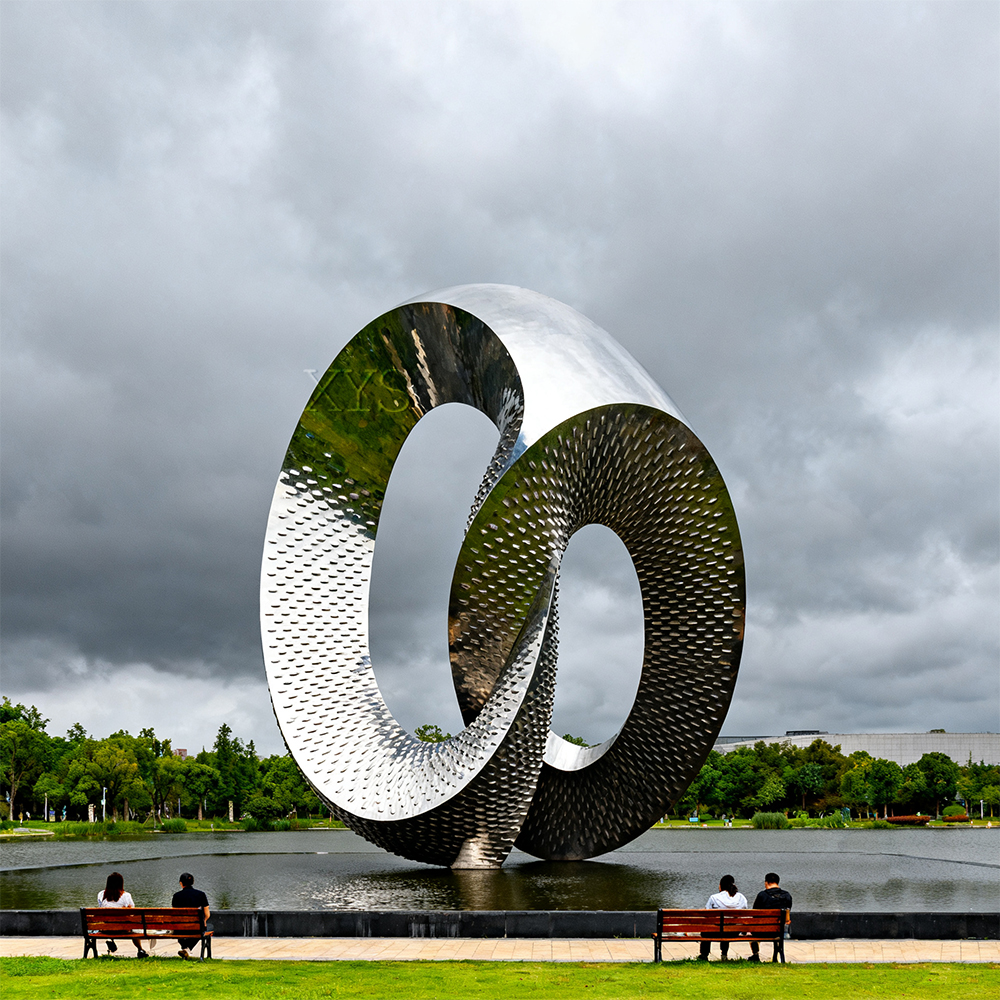
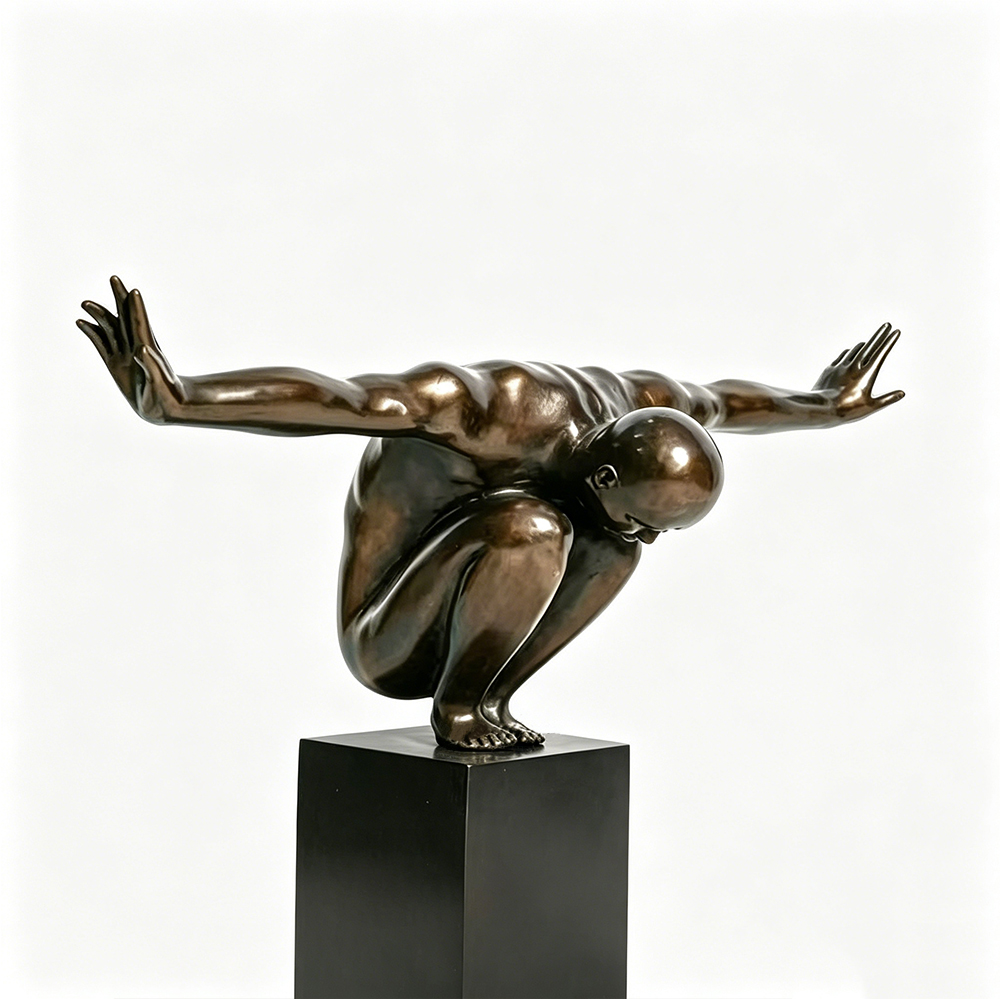
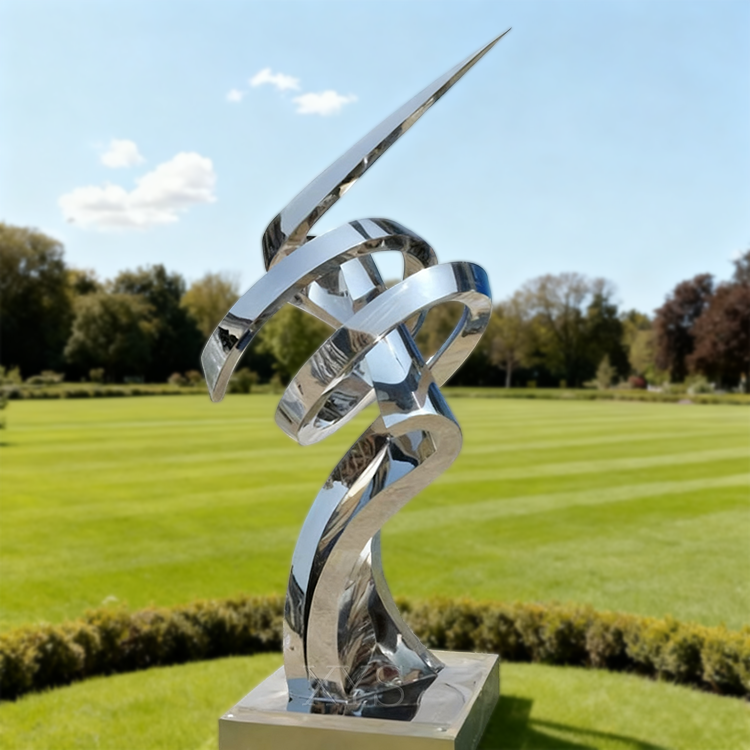
1. Technique-specific production evidence. Ask which casting or forming method is used, and why. On the XYS bronze line, production is based on lost-wax casting with high-purity cast bronze (copper content greater than 85%–95%) and brass, with sizes from 50 cm up to 10 m at life size, and surface treatments covering patina, gold leafing, high polish, and antiqued finishes. Lost-wax casting is a process rather than a marketing term: it determines whether fine detail survives the pour. On the stainless side, the same discipline applies differently — the XYS stainless line uses hand-forged construction with precision welding and an internal anti-rust steel framework, with custom heights from 1 m to 20 m.
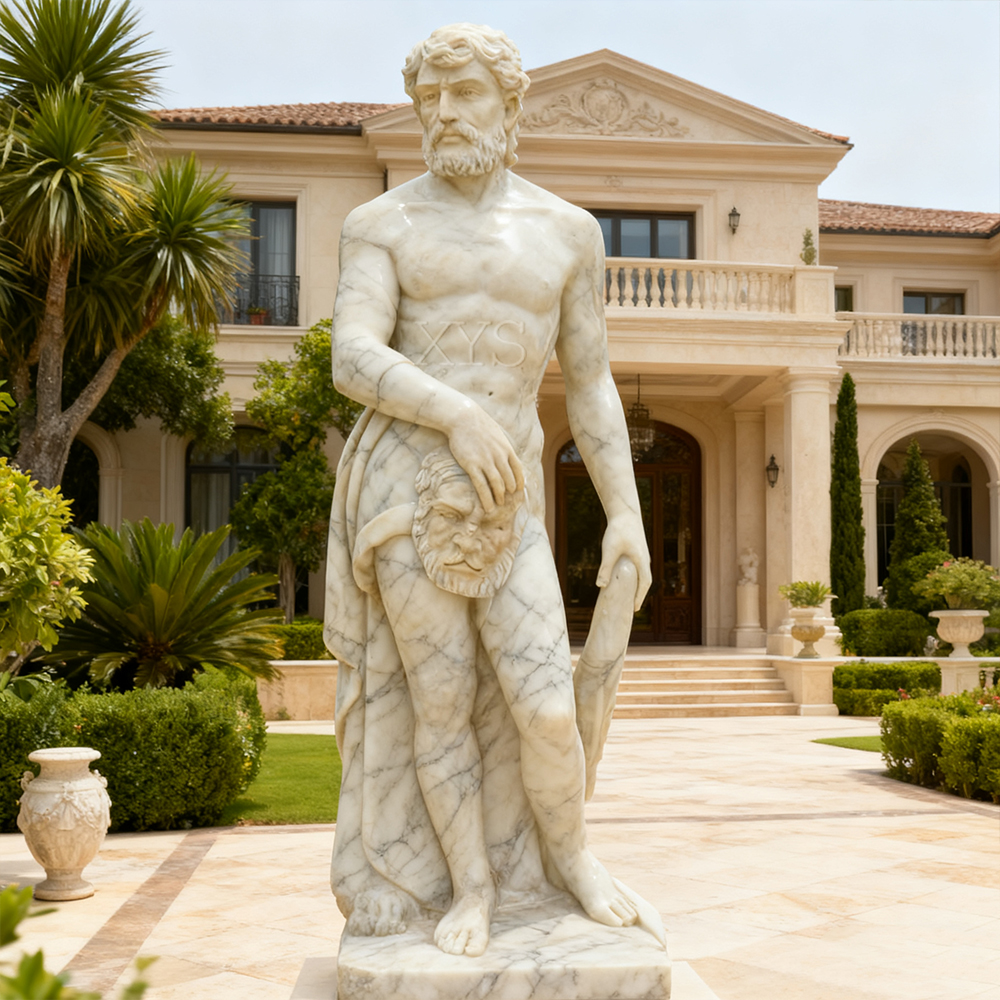
2. Surface finishing depth. Finish quality is a function of process steps, not adjectives. The stainless line achieves an 8K mirror finish through six to eight stages of professional hand-polishing — a buyer should confirm how many polishing stages are standard, because a single-pass polish will show distortion in reflected lines at large scale. On stone, the equivalent checks are hand-carving, honing, high-gloss polishing, and acid washing. On granite monuments, surface treatment covers 100% mirror polishing, laser engraving, and sandblasting, which is what makes precision lettering and portrait etching repeatable.
3. Structural engineering for large outdoor pieces. Height above roughly three metres shifts a sculpture from an object into a structure. The relevant capability is whether the supplier builds an internal anti-rust steel framework into large-scale stainless work, and whether seamless welding is used so joints are invisible on a polished surface. Both are documented capabilities of the XYS stainless line. Ask to see a frame detail, not just the finished exterior.
4. Material specification, not material name. "Stainless steel" and "Corten steel" are categories; the specification is what determines lifespan. The XYS material standard specifies Grade A natural marble, anti-corrosion weathering steel, and premium 304/316L stainless steel. Corten products are built on authentic weathering steel to ASTM A242 / A588. Bronze is specified by copper content. Granite monuments use named stones including Shanxi Black, G603, and Blue Pearl. A supplier who cannot name the standard has not verified the material.
5. Traceability and finished-product inspection. The monument line is documented around strict finished-product inspection and material traceability, and the wider manufacturing operation states adherence to high-grade material standards. Traceability is the buyer's protection: it links the delivered piece back to a known material batch, which is exactly what is needed if a surface issue appears after installation.
6. A design-to-production pipeline that survives translation. XYS integrates traditional hand-carving techniques with modern 3D modeling and CNC precision processing, and supports 1:1 clay model visualization before production and 3D design draft confirmation. This matters for evaluation because a supplier who cannot show the digital-to-physical handoff cannot guarantee that what you approved is what will be carved.
Part B — Verifying Delivery Assurance
Delivery assurance is verifiable before you order, because it is a set of commercial terms and physical handling decisions rather than a promise. Five areas cover the ground.
1. Minimum order quantity and purchasing terms. MOQ assumptions stop many buyers before they ask. In XYS's documented terms, single-piece custom orders are accepted and there is no strict MOQ, with more favorable pricing on bulk orders and a recommendation to order multiple pieces together so that mould and shipping costs are shared. Confirm the MOQ position for your specific material line in writing, since mould-dependent processes behave differently from hand-carved ones.
2. Acceptance criteria and the inspection point. Fix the acceptance standard against three references: the approved 3D design draft, the named material specification, and the agreed surface finish. Then agree where inspection happens — ideally at the factory before crating, so that any correction is made before the piece enters the logistics chain.
3. Packaging suitability for large outdoor pieces. Packaging is where oversized sculpture most often fails. The XYS delivery system specifies professional seaworthy packaging using reinforced wooden crates and steel frames, developed for a one-stop delivery process that runs from design through to on-site guidance. For pieces at the upper end of the size range, ask for the crate drawing and the lifting points, not just a statement that packaging is "export standard".
4. Shipping scope: global, and where door-to-door sits. XYS documents global shipping support with bulk order discounts. Whether shipment is arranged door-to-door or port-to-port is a commercial term that should be settled per project, together with the Incoterm, port of discharge, and customs classification of the artwork. Buyers shipping original sculpture into the EU should confirm the HS classification early, given the different scrutiny that applies to original works versus mass-produced metal articles.
5. Installation support and site readiness. Delivery assurance ends at installation, not at the port. XYS supplies installation instructions with each sculpture and can guide on-site installation by video call, alongside global on-site installation guidance as part of its one-stop delivery system. On the buyer's side, permanent outdoor installation typically requires an installation foundation, steel structure support, LED lighting systems where specified, and lifting and transportation equipment on site — items that should be confirmed before the sculpture is shipped.
Step-by-Step: A Pre-Order Verification Sequence
Applied in order, this sequence converts the two-part framework into an auditable evaluation record.
- Define the site and material envelope first. Establish exposure conditions (coastal, urban, high-traffic), target height, and intended lifespan. Coastal and humid environments point toward 316-grade stainless; classical figurative work points toward bronze; low-maintenance landscape work points toward weathering steel.
- Request technique-specific evidence for the exact process. For bronze, ask about casting method and copper content. For stainless, ask about welding approach and internal framework. For stone, ask about carving method.
- Confirm material grade and standard in writing. Name the stainless grade, the weathering steel standard, or the marble grade — and record it in the order documentation.
- Request the 3D design draft, and a prototype where warranted. The documented XYS customization path runs from drawings, photographs, or concepts to a 3D design draft for confirmation before production, with prototyping available as an optional stage and 1:1 clay model visualization for design-critical work.
- Fix MOQ, pricing tiers, and purchasing terms. Confirm whether single pieces are accepted, how bulk pricing applies, and how tooling and shipping costs are shared across multiple pieces.
- Agree acceptance criteria and the inspection point. Write the standard against the approved draft, material, and finish.
- Confirm the packaging specification and shipping scope. Obtain the crate specification, confirm Incoterm and destination terms, and clarify what "global shipping support" includes for your route.
- Confirm installation support and site equipment. Installation instructions, video guidance, or on-site supervision — plus the foundation, support structure, and lifting equipment the site must provide.
- Book the factory visit. Use the checklist further below to verify all five product lines on the ground.
Use Cases: Matching Verification Checks to Project Type
Different project types put different checks under the microscope, because the dominant risk changes with the application.
- Urban public art and landmark commissions. The dominant risk is structural, at heights from 1 m to 20 m. Verify internal framework design, seamless welding, and polishing stage count before anything else. Stainless steel sculpture is documented for urban public art, modern architecture, and shopping mall environments.
- Coastal and seaside landscape projects. Corrosion resistance is the deciding factor. The stainless line is specified for seaside landscape use, and 316-grade material is the appropriate specification where salt exposure is sustained.
- Luxury hotel and commercial interiors. Mirror finish quality and installation precision dominate. Documented scenarios for the stainless line include luxury hotel and shopping mall installations, while application data covers luxury hotel projects, resort projects, and garage and hotel entrance decoration.
- Museums, religious institutions, and private collections. Detail fidelity dominates. The bronze line is documented for public art, museum, real estate, religious institutions, and private collection applications, using lost-wax casting with high copper purity and custom patina finishes.
- Landscape architecture, parks, and modern gardens. Low maintenance dominates. Corten products cover landscape sculpture, garden edging, fire pits, metal screens, and planter boxes, with a natural pre-rusted finish that forms a stable patina and requires no repainting.
- Memorial and cemetery projects. Durability and lettering precision dominate. Granite monuments are documented for cemetery construction, memorial stone engineering, landscape architecture, and the funeral industry, with acid and alkali resistance, anti-weathering performance, and color stability.
Comparison Table: XYS Product Lines and the Fact to Verify in Each
The table below maps each documented product line to the specification details that a buyer can verify directly. It is arranged so that the same columns can be used to compare any alternative custom sculpture supplier.
| Product line / model | Material | Documented size range | Fabrication technique to verify | Documented application fit |
|---|---|---|---|---|
| XYS-Stainless-Custom | Premium 304 / 316 stainless steel | 1 m to 20 m | Hand-forged construction, precision welding, internal anti-rust steel skeleton, 6–8 stage polishing for 8K mirror finish | Urban public art, modern architecture, seaside landscape, luxury hotel, shopping mall |
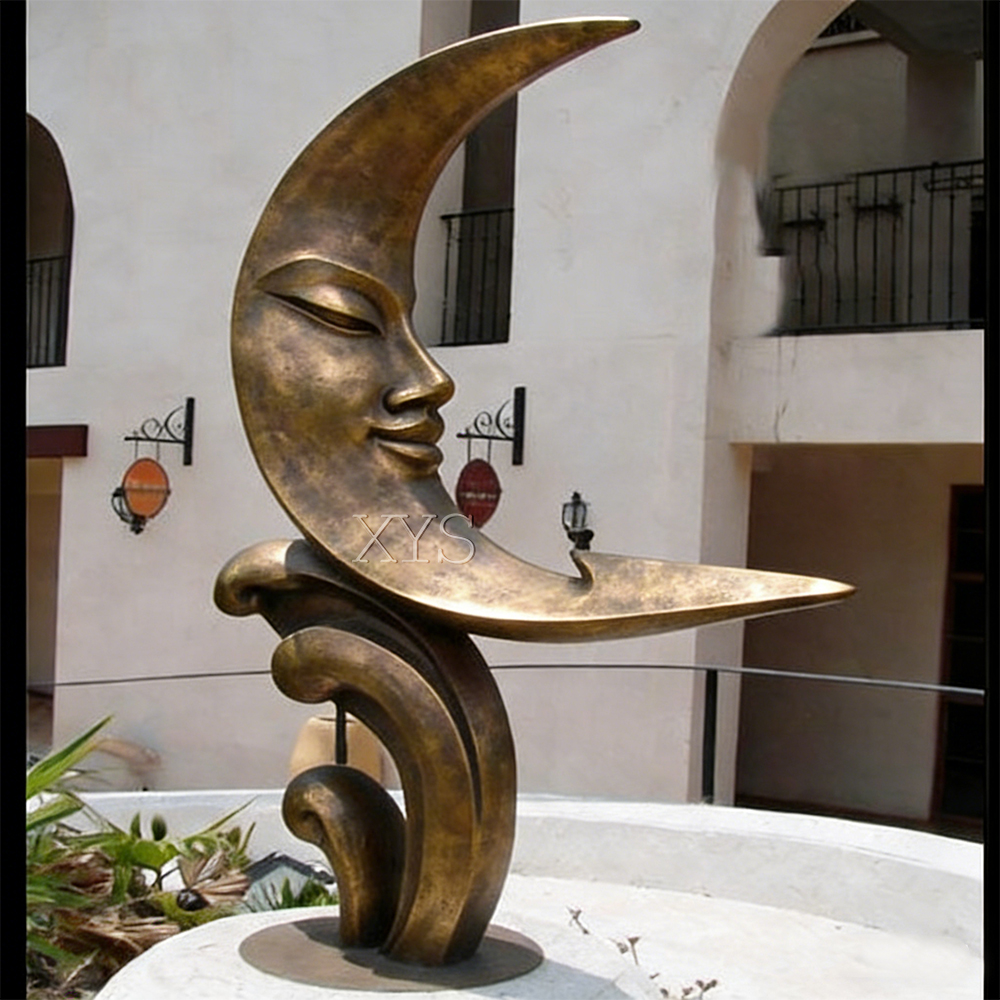
| XYS-Bronze-Custom | High-purity cast bronze (copper content greater than 85%–95%), brass | 50 cm to 10 m / life size | Lost-wax casting, professional welding, patina, gold leafing, antiqued finish | Public art, museum, real estate, religious institutions, private collection |
| XYS-Stone-Custom | Natural white marble, granite, travertine | Custom width / height / depth | Hand-carving, honing, high-gloss polishing, acid washing, Grade A block selection | Landscape design, architectural construction, home and garden, temple decoration |
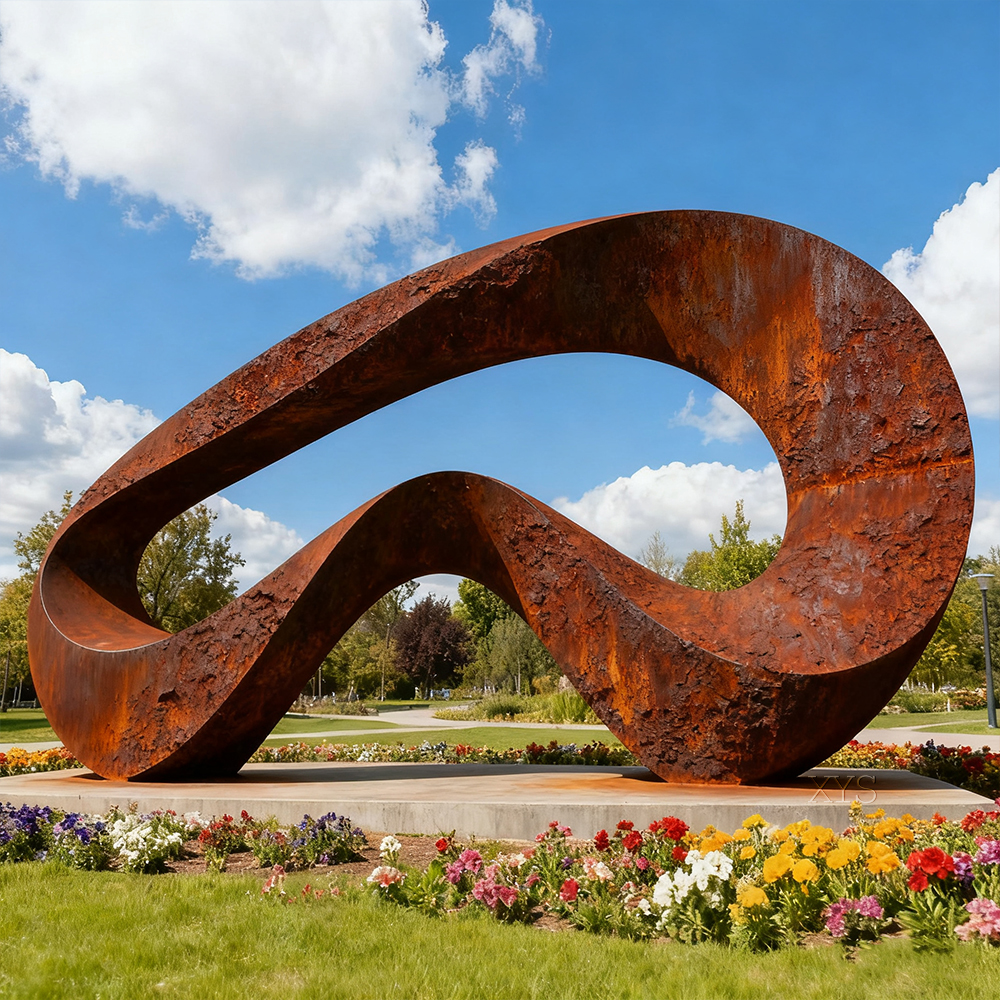
| XYS-Corten-Custom | Corten / weathering steel to ASTM A242 / A588 | Custom height / width | Natural pre-rusted finish (stable patina) or raw self-weathering finish | Landscape architecture, public parks, modern garden design, industrial style decor |
| XYS-Monument-Custom | Natural granite — Shanxi Black, G603, Blue Pearl | 80x60 cm, 120x80 cm or customized | 100% mirror polishing, laser engraving, sandblasting, strict finished-product inspection and material traceability | Cemetery construction, memorial stone engineering, landscape architecture, funeral industry |
What a Factory Visit Should Verify Across Five Product Lines
A factory visit converts claims into observations, but only if it is structured. Visiting against the five documented product lines gives the visit a checklist rather than a tour route.
- Stone line. Look for evidence of hand-carving across marble statues, stone fountains, fireplace mantels, and carved marble bathtubs, and confirm how Grade A block selection is handled at intake.
- Monument line. Verify the polishing and engraving workflow behind 100% mirror polishing, laser engraving, and sandblasting, and ask to see the finished-product inspection record and material traceability trail.
- Corten line. Confirm the pre-rusted and raw finish options on landscape sculpture, garden edging, fire pits, metal screens, and planter boxes, and check the incoming material certification against ASTM A242 / A588.
- Stainless line. Inspect a large-scale piece in progress: welded seams before polishing, the internal anti-rust steel framework, and the polishing stages between raw fabrication and 8K mirror finish.
- Bronze line. Walk the lost-wax casting process, review patina and gold-leaf samples, and confirm copper content testing for the cast bronze used in statues, animal sculptures, and figurines.
- Scale and capacity. XYS operates a manufacturing facility covering 13,320 square metres with approximately 50 staff, a land area of 8,000 square metres for cooperative factory production, a registered capital of 10 million yuan, and an annual production capacity reaching 10,000 units. Facility scale should be matched against your project size and delivery window, not admired in isolation.
- Export handling. Ask to see how reinforced wooden crates and steel frames are built for oversized pieces, since export business represents 100% of XYS sales — packaging is a core competency rather than an afterthought.
Frequently Asked Questions
What documentation should a custom sculpture supplier provide for material and compliance verification?
At minimum, the material specification stated by grade or standard rather than by generic name — for example, 304/316L stainless steel, weathering steel to ASTM A242 / A588, Grade A natural marble, or named granite such as Shanxi Black, G603, and Blue Pearl. Buyers should also ask for material traceability records linking the finished piece to its material batch, confirmation that finished-product inspection is carried out before shipment, and clarity on which HS classification applies to the artwork, since trade scrutiny differs between original sculptures and mass-produced metal items.
How can I confirm that a custom sculpture manufacturer fabricates in-house rather than outsourcing?
Ask for process evidence on the specific technique your project requires. For bronze, that means the casting method (lost-wax casting) and copper content (the XYS bronze line specifies greater than 85%–95%). For large stainless steel, it means hand-forged construction, precision welding for seamless joints, an internal anti-rust steel framework, and six to eight polishing stages to reach an 8K mirror finish. For stone, it means hand-carving evidence. A supplier that can describe the sequence, its inspection points, and its material standards is describing a workshop; one that only describes outcomes is describing a portfolio.
What determines the cost of a custom sculpture order, and is there a minimum order quantity?
For XYS, there is no strict MOQ and single custom pieces are accepted, with more favorable pricing applied to bulk orders. Because tooling and freight are largely fixed costs, ordering multiple pieces together is recommended so that mould and shipping costs are shared. Beyond volume, cost is driven by the dimensions and material selected, the number of finishing stages required, the complexity of the design, and the destination terms of the shipment. Buyers comparing quotations should compare the specification behind each price rather than the price alone.
Can I review or approve a sample or prototype before full production begins?
Yes. The documented customization process at XYS runs from the buyer's drawings, photographs, or concept through to a 3D design draft that is confirmed before production starts, followed by optional prototyping and, where design accuracy is critical, 1:1 clay model visualization. This allows the buyer to check proportion, detail, and finish intent at the design stage rather than after fabrication — which is the point at which changes are least expensive.
How are lead time, packaging, and delivery handled for large outdoor sculptures?
Lead time for custom sculpture is project-specific and is confirmed after design approval, since it is assessed against the size and the manufacturing process involved. For shipment, XYS uses professional seaworthy packaging with reinforced wooden crates and steel frames, supports global shipping with bulk order discounts, and provides installation instructions plus video-call installation guidance, alongside global on-site installation guidance. To receive a timeframe and shipping scope assessed against your own dimensions and destination, you can send your drawings or concept through the XYS custom sculpture enquiry channel or request the company profile and available production capabilities brochure linked at the end of this article.
Conclusion: Evaluate Capability and Delivery as Two Separate Decisions
Custom sculpture supplier evaluation becomes manageable once it stops being a single judgment about artistic quality. Capability is a technical question with technical evidence: which casting or forming method, which material grade and standard, how many polishing stages, what internal framework, and what inspection and traceability records. Delivery is a commercial and physical question with documented answers: minimum order quantity and pricing tiers, written acceptance criteria, crate specification for oversized pieces, shipping scope and customs classification, and installation support. A supplier that answers both sides in specifics is a lower-risk partner than one that answers only the first in adjectives.
The market context reinforces the point. With the global art and sculpture market estimated at approximately USD 61.83 billion in 2026 and most North American public art commissions falling below a USD 250,000 budget, the cost of a rework or a re-ship is rarely absorbed comfortably by the project. Verifying process and terms before the order is placed is not bureaucracy — it is the cheapest risk control available to a buyer.
Next Step: Request a Sample Scope, Quotation, or Factory Visit
Jiangsu Xinyesheng Sculpture Co., Ltd. supports custom sculpture and statue projects across bronze, stainless steel, stone, Corten weathering steel, and granite monument lines, with design, fabrication, processing, transportation, installation, and after-sales service handled as one delivery system. To move from evaluation to a concrete scope, you can request a quotation, discuss a single-piece or bulk order, or arrange a factory visit covering all five product lines.
Company profile & available production capabilities (PDF): Download the XYS capability brochure
Website: www.xys-artsculpture.com | Email: mikey@xingyesheng.com | Tel / WhatsApp: +86 138-1259-9789
Have Questions or Need More Details?
Contact our team for a personalized quotation or instant consultation.
Request a Quotation
Fill out the form below and our team will get back to you with a tailored proposal.
WhatsApp Direct Chat
Prefer to chat in real-time? Message us on WhatsApp for instant assistance & quick answers.
- Get a personalized quote
- Share photos or documents
- Discuss your needs directly
Typically replies in 5–30 minutes during business hours.