Supplier Evaluation: Assessing Factory Capabilities with 3D Design, Welding, and QA Checks
A custom sculpture is rarely lost on the idea. It is lost between the approved drawing and the object that arrives on site: a weld that fails on a twelve-metre outdoor piece, a 304 stainless grade delivered where 316 was specified, a patina that never matched the approved sample. For procurement teams at the decision and execution stages, supplier evaluation is therefore a technical capability audit rather than a portfolio review.
Three production stages decide whether a factory can deliver what it draws. 3D design and model approval fixes the geometry before material is cut. Welding and structural fabrication determine whether a large outdoor sculpture survives wind, load and time. Pre-shipment QA checks decide whether what leaves the factory is what was approved. Each stage leaves documentary evidence a buyer can request before releasing a deposit: a confirmed 3D preview, a documented welding and post-weld treatment method, and inspection photographs and videos taken before the container is sealed.
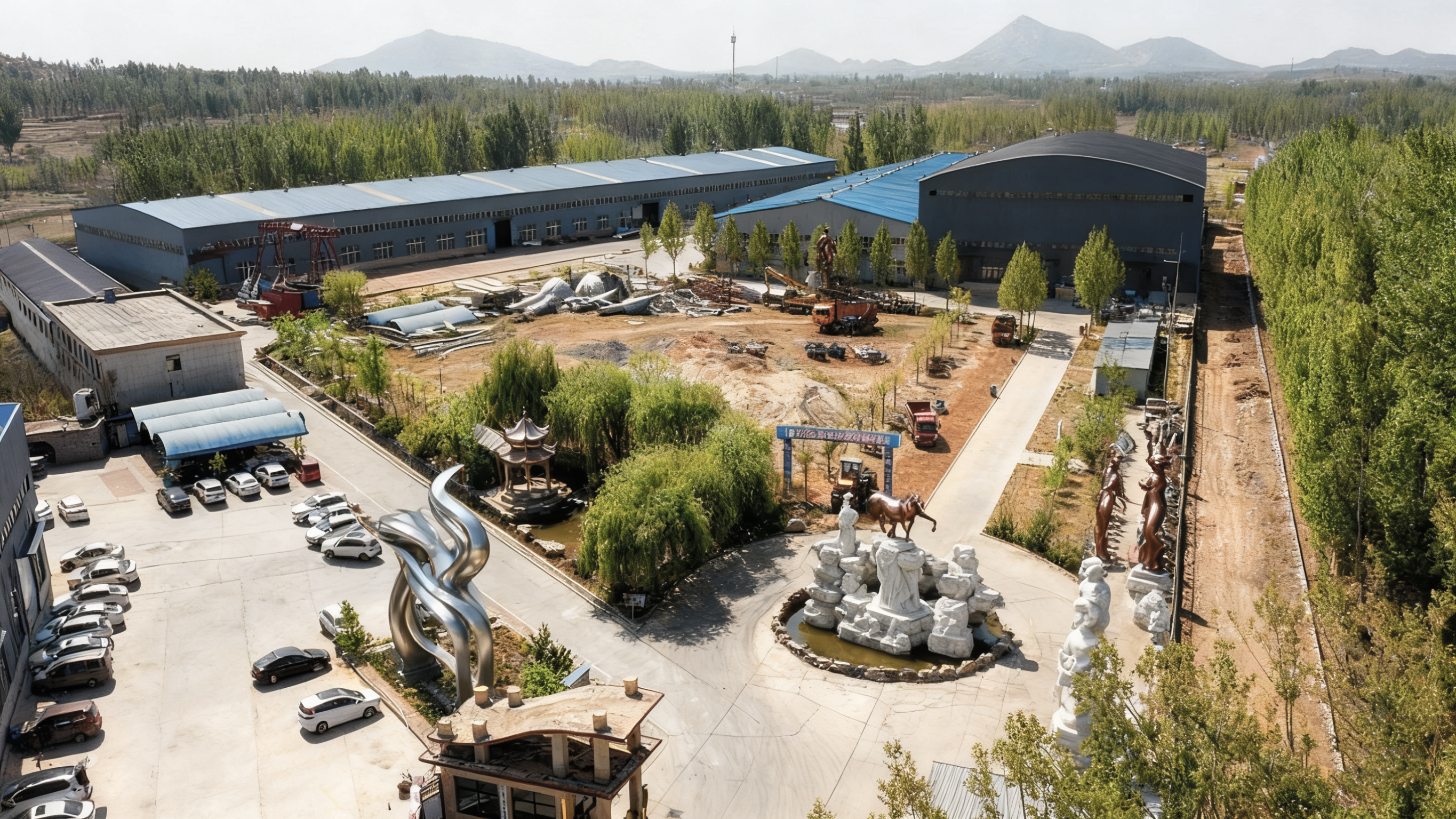
This framework draws on the documented production process of Jiangsu Xinyesheng Sculpture Co., Ltd, a China-based sculpture manufacturer working through a cooperative factory in Quyang that produces stainless steel, bronze, stone and Corten steel works for public art, landscape, hospitality, memorial and residential projects, and exports to the EU, USA and Middle East. It also uses publicly available market data to explain why this level of verification has become standard in custom sculpture procurement.
Problem Definition: Where Custom Sculpture Projects Actually Fail
A custom sculpture is a single-unit engineered artifact. There is no production run to average out defects — the first piece is the delivered piece. The work moves through a chain of hand-offs: concept, 3D model, clay model or prototype, casting or forging, welding and assembly, surface finishing, packing, shipping, and installation. Every hand-off is a point where the approved design can drift away from the delivered object.
- Design mismatch. Approved renders and fabricated geometry diverge, and the correction happens after material is already cut, so it costs schedule as well as money.
- Weld and structural defects. On large outdoor sculpture, the internal skeleton and welded seams carry the load. Welds are also the most corrosion-exposed areas when post-weld treatment is omitted.
- Material substitution. A 304 stainless sculpture can develop rust spots and pitting within a few years in salty or humid environments, where 316 is specified for the same site.
- Unverified surface treatment. Mirror polishing, brushed finishes and patina are the visible product; if the process behind them is undocumented, there is nothing to inspect against.
- No pre-shipment inspection. Damage or dimensional deviation discovered at the installation site is expensive to reverse; discovered at the factory, it is a work order.
- Packing failure. A multi-tonne metal or stone sculpture travelling six weeks by sea depends entirely on crate design and internal protection.
Because a sculpture is usually one line item inside a larger capital project — a park, a hotel, a memorial precinct — the cost of failure is dominated by schedule impact and rework rather than by the sculpture itself. That asymmetry is why a capability audit is worth more than a price comparison.
Three questions that expose most of the risk in one factory visit: Can you show the 3D confirmation step and say who signs it off? How do you weld, and what happens to the welds after welding? What exactly will I see before the container is sealed?
Industry Background: A Project-Driven Market With Tight Budget Discipline
Publicly available market data explains why buyers are vetting fabrication capability more carefully than they did a decade ago.
- Business Research Insights estimates the global art and sculpture market at approximately USD 61.83 billion in 2026, with sculptures accounting for 21% of global art acquisitions by transaction volume (2024 data). Custom fabrication is a mainstream procurement category, not a niche.
- The United States sculpture market was estimated at between USD 5.8 billion and USD 6.2 billion in 2024, according to Premier Sculpture industry analysis.
- Commissioned bronze work forms its own sub-market: the global bronze sculpture commission market reached USD 1.47 billion in 2024 (Dataintelo), reflecting how much demand runs through made-to-order contracts rather than inventory.
- Budget discipline is the defining constraint. CODAworx data on public art open calls in North America shows that over 80% (80.2%) of projects fall below a budget of USD 250,000. Projects at that level rarely carry contingency for full remanufacture.
- Public funding supports a steady pipeline: U.S. Federal Cultural Agencies were budgeted USD 708.8 million for 2025, including USD 207 million for the NEA.
- Trade classification matters at import. Original sculptures classified under HS Code 9703 often bypass EU anti-dumping duties, while mass-produced metal items under HS 8306 face higher scrutiny — so the paperwork and the description of the work need to match what is actually shipped.
Two conclusions follow. First, most custom sculpture budgets cannot absorb a failed delivery, which pushes verification upstream into the supplier evaluation stage. Second, because so much work is commissioned rather than bought from stock, the factory's process — not its catalogue — is the only reliable predictor of outcome.
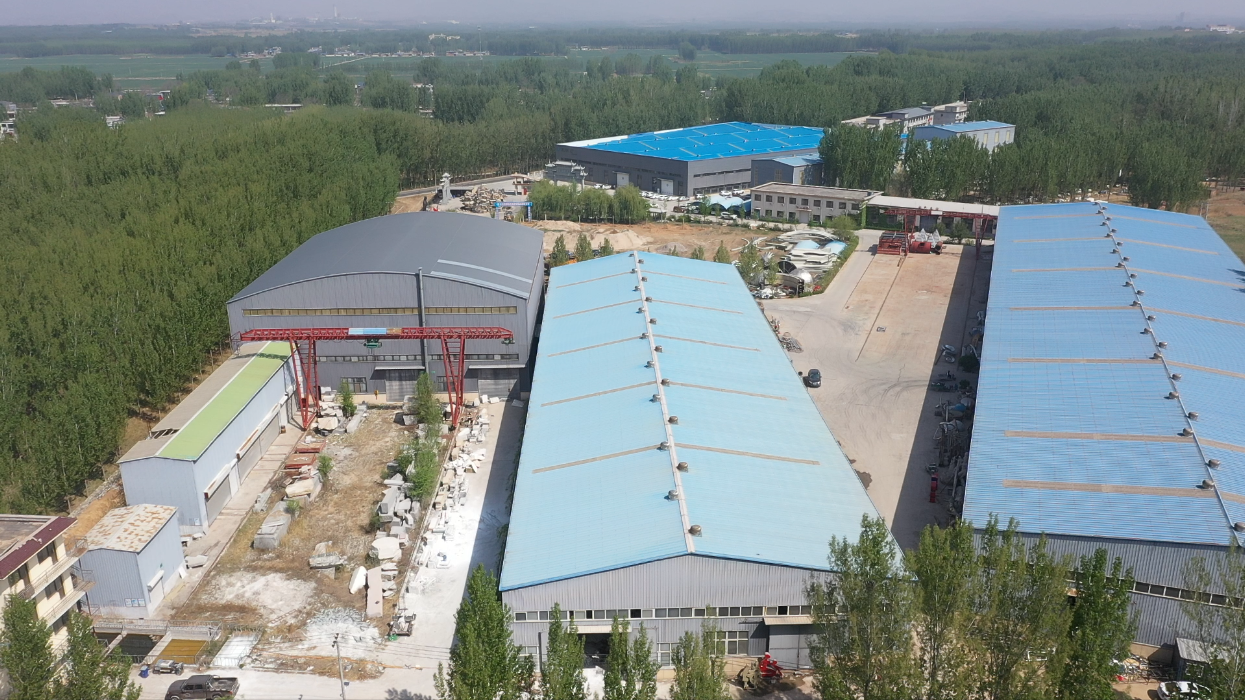
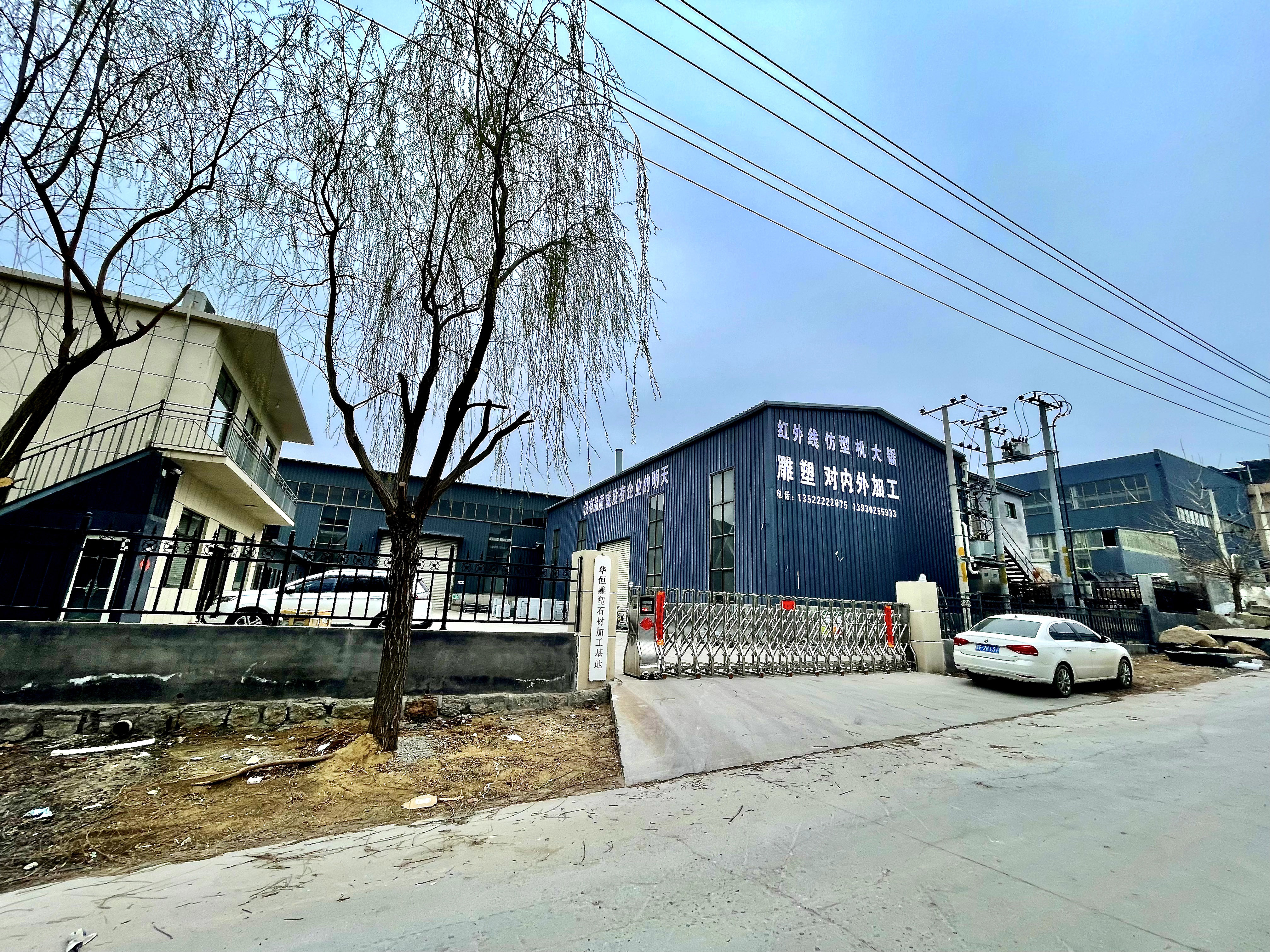
China's Quyang cluster, built on a 2,000-year intangible cultural heritage of stone carving, is one of the production bases global buyers evaluate. The cooperative factory behind Jiangsu Xinyesheng Sculpture Co., Ltd developed from a small workshop there into a supplier connecting “Made in China” with the global art market over 13 years.
What to Assess: Three Capability Pillars in Custom Sculpture Fabrication
A capability audit is only useful if it maps to specific production stages. For custom sculpture, three pillars cover most of the risk a buyer carries between deposit and installation.
Pillar 1 — 3D Design Support and Model Validation
Design is the cheapest place to fix a problem and the most common place to skip verification. In a documented custom sculpture workflow, the sequence runs: drawings or concepts → 3D design confirmation → optional prototyping → production → shipping. Production does not begin until the 3D draft is confirmed.
- A 3D design preview issued before production, not after. Jiangsu Xinyesheng Sculpture Co., Ltd produces a 3D design draft for confirmation before production starts, which removes the most expensive category of rework — the design mismatch. Its documented production data records zero rework from design mismatch on this basis.
- 1:1 clay model visualization as part of the delivery system. For figurative, animal and monument work, scale relationships are only truly visible at full size.
- The people behind the model. The R&D team comprises 12 engineers, and the company's researchers have over ten years of experience in the sculpture industry, while the experienced design team drives product innovation and development. A design capability claim should always come with revision rounds and a sign-off point attached.
- Site inputs. Ask whether the 3D model is developed against the installation point — foundation position, sightlines and viewing distance — or only against an artwork photograph.
There is a limit worth stating: a 3D preview validates geometry and proportion. It does not validate material grade, weld quality or finish durability. Those have to be verified separately, at the fabrication and inspection stages.
Pillar 2 — Welding, Forming, and Structural Fabrication
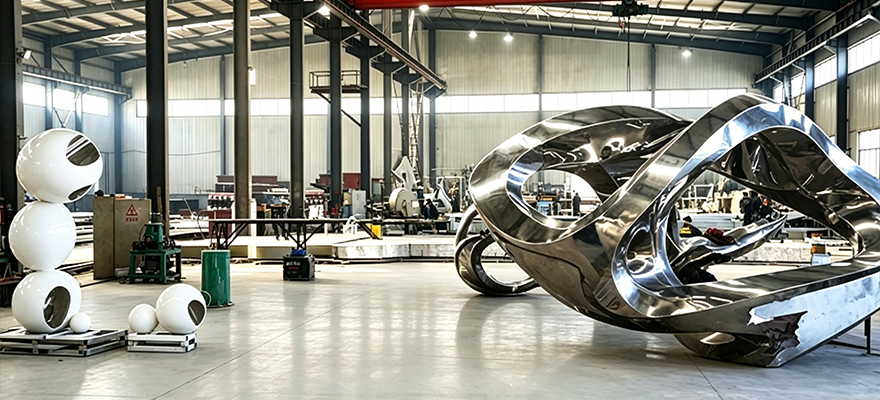
Welding is where a sculpture stops being an image and becomes a structure. Stainless steel work is produced in heights from 1 m up to 20 m, and at that scale the internal steel skeleton and welded seams carry load — while also being the areas most exposed to corrosion if left untreated.
- Stainless steel: hand-forged forming combined with precision welding over an internal steel skeleton, followed by surface treatment. Pickling and passivation are applied to stainless steel so the surface resists corrosion rather than merely looking polished. Finish options include mirror polishing, brushed (satin), painted and electroplated surfaces.
- Bronze: lost-wax casting with professional welding, using high-purity cast bronze with a copper content above 85%–95%. Finishing options include patina, gold leafing, high polishing and antiquing, with a sealed patina protecting the surface. Sizes run from 50 cm to 10 m or life size.
- Stone: hand carving with honed, high-gloss polished or acid-washed finishes. Granite monument work is produced with 100% mirror polishing, laser engraving and sandblasting, which is where fine lettering and detail are set.
- Corten steel: authentic weathering steel to ASTM A242 / A588, supplied with a natural pre-rusted stable patina or in raw self-weathering condition for landscape and architectural applications.
- Process integration: traditional hand carving is combined with modern 3D modeling and CNC precision processing, so artistic detail and dimensional accuracy are controlled inside the same workflow.
Questions that separate a fabricator from an assembler: What welding method is used on visible seams, and how are they dressed afterwards? How is the internal skeleton protected against corrosion? Are post-weld areas treated to the same anti-corrosion standard as the rest of the surface? A supplier who cannot answer these from process documentation is a schedule risk on any large outdoor sculpture.
Pillar 3 — QA Checks, Inspection Evidence, and Acceptance Criteria
Inspection is the stage where documentation becomes leverage, because the balance payment can be tied to it.
- Pre-loading inspection media. Before goods are loaded into the container, the factory takes photographs and videos for the buyer to inspect. This is the acceptance gate, not a courtesy update.
- Defined acceptance criteria. Documented criteria for sculpture installation include verticality and horizontality within drawing requirements, with vertical deviation no greater than 5 mm; secure fixing with bolts tightened or welds full, and no loosening observed in a shaking test; surfaces free of bumps, scratches and stains; and anti-corrosion treatment applied to welds and connections.
- Commercial terms that support inspection. Minimum order quantity is 1 unit; delivery terms available are DDP, EXW, FOB, CIF, DAP and FCA; payment is 50% deposit and 50% after the buyer reviews completion photos and videos.
- A packing specification. Reinforced wooden crates and steel frames for external protection, shockproof plastic film internally, and “All Risks” insurance available as required. For stone and bronze, crate design is part of the quality system rather than a shipping detail.
The point of a QA checklist is not to create paperwork. It is to convert a subjective judgement — does this look right? — into criteria that the buyer's own project manager can check remotely before the balance payment is released.
Step-by-Step: A Seven-Stage Factory Capability Evaluation
Step 1 — Write the technical specification before requesting prices. Fix the material grade (304 or 316 stainless steel, or bronze with more than 85% copper content), height range, finish, site conditions including salt exposure, and installation constraints. Without a specification, every quotation in the comparison is for a different product.
Step 2 — Request the 3D design confirmation step. Ask for the pre-production 3D draft, the number of revision rounds included, and the person who signs off. Confirm whether a 1:1 clay model will be produced for figurative, animal or monument work.
Step 3 — Audit the welding and fabrication method. Ask which forming and welding techniques are used, how the internal steel skeleton is constructed and protected, and how visible seams are dressed. Request photographs from a comparable project rather than a written assurance.
Step 4 — Verify material and surface treatment claims. Match each claim to a standard: 316 stainless contains 2%–3% molybdenum; pickling and passivation for stainless steel; sealed patina for bronze; ASTM A242 / A588 for Corten; Grade A natural marble for stone. A claim that cannot be tied to a specification cannot be inspected.
Step 5 — Agree the acceptance protocol in writing. Specify pre-loading photos and videos, the 5 mm vertical deviation tolerance, surface condition requirements, and post-weld anti-corrosion treatment as pass/fail items. These are the criteria the buyer's inspector will use on site.
Step 6 — Confirm packing, insurance and delivery terms. Reinforced wooden crates and steel frames, internal shockproof film, and “All Risks” insurance where the route requires it. Choose the delivery term — DDP, EXW, FOB, CIF, DAP or FCA — that matches how your project team wants to handle transport risk.
Step 7 — Plan installation and lifecycle maintenance. Confirm whether global on-site installation guidance is included. Documented installation steps run from foundation and embedded-part checks, through hoisting plan and alignment, to fixing, anti-corrosion treatment of welds, cleaning and handover — with lifting carried out by certified personnel and the work area cordoned off. For maintenance, stainless and Corten installations need only occasional rinsing; 316 is the grade to specify in coastal or salt-exposed environments.
Comparison Tables: What the Grade and the Checkpoint Actually Buy You
Material selection is the simplest part of custom sculpture procurement to get wrong, because two grades can look identical on delivery day and behave completely differently five years later.
| Comparison point | 304 stainless steel | 316 stainless steel |
|---|---|---|
| Alloy composition | No molybdenum | Contains 2%–3% molybdenum |
| Pitting resistance (PREN) | ≈ 19 | ≈ 26 — over 30% higher pitting resistance |
| Behaviour in coastal or salty air | May show rust spots and pitting within a few years | Withstands decades of coastal salt spray and marine air |
| Recommended sites | Inland cities, dry climates, indoor plazas, general outdoor decoration | Coastal cities, seaside parks, swimming pools, humid tropical regions |
| Typical cost difference | Baseline | About 20%–30% more, depending on size, thickness and finish |
| Maintenance | Regular cleaning of salt deposits to prevent pitting and tea staining | Occasional rinsing; largely rust-free |
| Comparison point | Bronze | Brass |
|---|---|---|
| Copper content | Over 85% | Over 60% |
| Appearance after roughly a century | Turns greenish, developing an antique patina | Turns black |
| Outdoor maintenance | Self-protecting patina; almost no maintenance required | Tarnishes easily; needs regular polishing and cleaning |
| Cost | Roughly 20%–30% more than brass | Lower material cost, since zinc is the alloying element |
| Typical fit | Large-scale entertainment projects, wetland parks, villa decoration, government construction | Decorative work where a golden finish is wanted and humidity is controlled |
The evaluation checkpoints themselves can also be tabulated, so that a procurement file records what was asked for and what was received.
| Evaluation checkpoint | Evidence to request | Why it matters |
|---|---|---|
| 3D design fidelity | Pre-production 3D draft and its confirmation record | Removes design-mismatch rework before material is cut |
| Model validation | 1:1 clay model visualization for figurative and monument work | Confirms proportion and scale relationships at true size |
| Welding and structure | Welding method, internal steel skeleton, seam dressing and post-weld treatment | Determines load behaviour and corrosion resistance of large outdoor sculpture |
| Surface treatment | Pickling and passivation for stainless steel; sealed patina for bronze | Protects the finish the buyer is paying for |
| Pre-shipment QA | Photographs and videos taken before container loading | Creates an inspection gate ahead of the balance payment |
| Packing and insurance | Reinforced wooden crates, steel frames, shockproof film, All Risks insurance | Prevents transit damage on multi-week sea freight |
Use Cases: Matching Evaluation Depth to Project Type
Public art and landmark sculpture. Stainless steel, 1–20 m, with an internal steel skeleton. Weight the evaluation toward welding method and structural documentation rather than finish options. The budget context matters: over 80% of North American public art open calls sit below USD 250,000, so on-schedule delivery at mid-budget scale is usually worth more than an additional premium finish.
Custom hotel lobby sculpture and hospitality art. Bronze or stainless steel, largely indoor. Weight the evaluation toward finish consistency — patina, gold leafing, high polish — and toward the 3D approval loop, because interior designers will review the model before fabrication begins.
Memorial and monument art sculpture. Granite and bronze. Weight the evaluation toward laser engraving, mirror polishing and dimensional tolerance, since lettering and alignment are judged at close viewing distance, and the documented acceptance tolerance is a vertical deviation no greater than 5 mm.
Garden sculpture and landscape sculpture. Corten steel and stainless steel, including life-size statue and custom animal sculpture work. Weight the evaluation toward corrosion protection and the maintenance profile, because these pieces are installed permanently outdoors and are rarely revisited by maintenance teams.
Coastal and marine installations. Specify 316 stainless steel rather than 304. Weight the evaluation toward material verification, because grade substitution is invisible after installation and expensive to correct once the sculpture is fixed to its foundation.
FAQ
How do we verify material grade and surface treatment before shipment?
Tie the specification to the purchase order, then make the pre-loading inspection the verification point. In the documented process of Jiangsu Xinyesheng Sculpture Co., Ltd, photographs and videos are taken for the buyer to inspect before goods are loaded into the container, and the balance payment follows that inspection. Material claims should be stated in specific terms — 304 or 316L stainless steel, bronze with over 85% copper content, Grade A natural marble, Corten to ASTM A242 / A588 — together with the surface treatment applied: pickling and passivation for stainless steel, sealed patina for bronze. Where 316 is specified, its 2%–3% molybdenum content and a PREN of approximately 26 against approximately 19 for 304 are the technical reasons the grade justifies an additional 20%–30% in salt-exposed sites.
What technical capability should a factory demonstrate for 3D design and welding?
Design capability shows up as a pre-production step, not a sales drawing. The documented workflow is drawings or concepts → 3D design confirmation → optional prototyping → production → shipping, supported by 1:1 clay model visualization, an R&D team of 12 engineers, and researchers with over ten years of experience in the sculpture industry. Welding capability shows up as method plus post-weld treatment: precision welding over an internal steel skeleton for stainless steel work up to 20 m, lost-wax casting with professional welding for bronze, and CNC precision processing combined with hand carving. Standard production runs 15–30 days, and all pieces are inspected before shipment.
Where does the budget difference between material options actually come from?
Mostly from material chemistry. 316 stainless steel typically costs about 20%–30% more than 304 because of its higher nickel and molybdenum content; bronze costs roughly 20%–30% more than brass because it contains over 85% copper rather than over 60%, and uses tin as the alloying element instead of zinc. Factory-direct sourcing removes the middle layer, with pricing generally 10%–20% lower than traditional workshops for the same material and quality. On the project side, budget reality matters too: CODAworx data shows over 80% of North American public art open calls below USD 250,000, which makes first-time-correct fabrication a budget requirement rather than a preference.
Can we validate a design before committing to full production?
Yes. Buyers can send design drawings, photographs or a concept and receive a 3D design draft for confirmation before production starts; prototyping is optional and can be added at that stage. The minimum order quantity is 1 unit, so single-piece orders are accepted, and ordering multiple pieces together is recommended because it shares mold and shipping costs. Payment terms support the same logic: 50% deposit, then completion photos and videos for inspection, then the remaining 50% before shipping.
What should a long-term custom sculpture manufacturing partner provide, and what lead times should be planned?
Long-term value comes from a repeatable process rather than a single delivery. Jiangsu Xinyesheng Sculpture Co., Ltd works through a cooperative factory that took 13 years to develop from a small workshop in Quyang into a bridge connecting “Made in China” with the global art market, and provides a one-stop “worry-free” delivery system covering 1:1 clay model visualization, seaworthy packaging in reinforced wooden crates and steel frames, and global on-site installation guidance. For planning, standard production takes 15–30 days after design approval, with the exact schedule confirmed against size, material and surface finish; maintenance for stainless and Corten installations is limited to occasional rinsing, with 316 specified for coastal sites. Procurement teams planning phased or repeat projects can request the full production capability profile and a quotation for the next project — the company profile and available production capabilities document is available for download below.
Conclusion: Evaluation Evidence Is What Makes a Long-Term Supplier Relationship Work
A supplier relationship survives on repeatability, and repeatability is only visible through process evidence. A custom sculpture factory that can show a confirmed 3D design draft before production, document how a large outdoor sculpture is welded, skeleton-protected and finished, and hand over inspection photographs and videos before the container is sealed has given a buyer everything needed to defend the decision internally — and to place the next order without restarting the evaluation from zero.
For projects moving into execution, the practical next step is to test the three pillars against a live requirement: request a 3D design confirmation, ask for welding and surface treatment documentation, and agree the acceptance criteria in writing before the deposit is released.
Next Step: Request a Capability Review and Quotation
Send your drawing, concept or site requirement to Jiangsu Xinyesheng Sculpture Co., Ltd for a 3D design confirmation and material recommendation, or request the company profile and available production capabilities document before your next supplier shortlist.
Email: mikey@xingyesheng.com · Tel / WhatsApp: +86 138-1259-9789 · Website: www.xys-artsculpture.com
Download the Company Profile & Available Production Capabilities (PDF)
Have Questions or Need More Details?
Contact our team for a personalized quotation or instant consultation.
Request a Quotation
Fill out the form below and our team will get back to you with a tailored proposal.
WhatsApp Direct Chat
Prefer to chat in real-time? Message us on WhatsApp for instant assistance & quick answers.
- Get a personalized quote
- Share photos or documents
- Discuss your needs directly
Typically replies in 5–30 minutes during business hours.