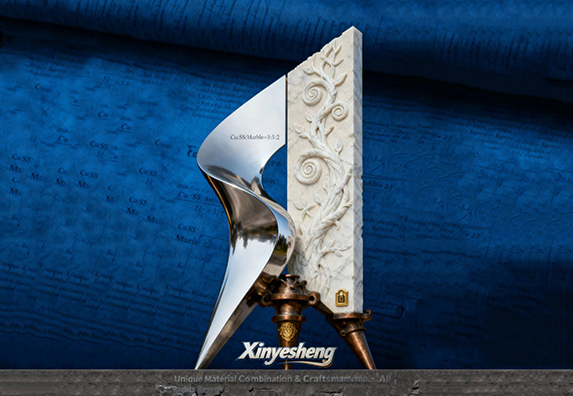
Custom Sculpture Categories Explained: Stone, Bronze, Stainless Steel, and Corten Steel
Custom sculpture work is usually specified by material category before anything else, because the category decides the fabrication route, the surface treatment, the transport plan, and how the piece behaves once it is standing outdoors. The five categories that appear most often in build-to-order projects are natural stone, cast bronze and brass, 304/316 stainless steel, Corten weathering steel, and granite memorial or monument work. Stone is carved and polished, bronze is cast by the lost-wax method and finished with patina or gilding, stainless steel is welded and mirror-polished, Corten steel is fabricated and left to develop a stable rust layer, and memorial work is cut from granite and finished by mirror polishing, sandblasting, or laser engraving.
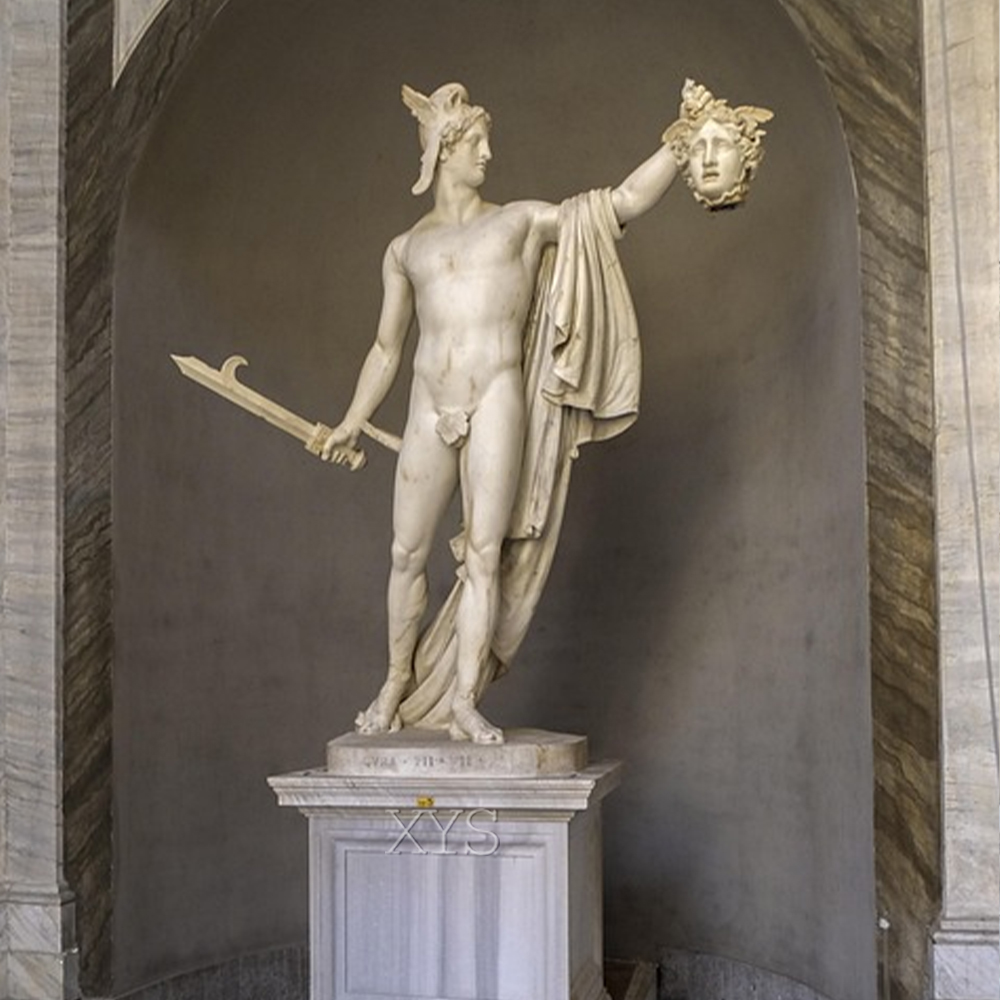
Why the Material Category Is a Project Decision, Not a Style Preference
Sculpture quotations are frequently compared on unit price alone, and the comparison usually breaks down at the first technical question. A two-metre mirror-polished stainless steel figure and a two-metre hand-carved marble figure do not share a forming process, a structural logic, a transport method, or an installation sequence, so a single rate cannot describe both of them.
Category selection fixes four things at the same time:
- Forming process — carving from a solid block, casting from a wax pattern, welding plate and tube over a steel skeleton, or fabricating sheet and section steel.
- Structural support — an internal steel skeleton for stainless steel, installation foundations for permanent metal pieces, steel structure support for weathering steel, and lifting and transportation equipment for heavy stone.
- Surface treatment and its upkeep — polished or acid-washed stone, patina or gold leaf on bronze, 8K mirror polishing or brushing on stainless, a self-forming patina on Corten.
- Delivery and installation plan — reinforced wooden crates and steel frames for export, professional export packaging for stone, and on-site installation guidance where the site demands it.
The cost of choosing late is rework. If the category is changed after the design has been confirmed, the model may have to be re-detailed: details that read well as carved relief behave differently as welded plate, and a patina schedule that suits cast bronze has no equivalent on polished stainless steel. Category is also not the same as style. Two life-size figurative statues, one cast in bronze and one carved in marble, can share a pose and share nothing else about how they are made, moved, or maintained.
Industry Background: A Fragmented, Project-Driven Market
Custom sculpture is a large but highly fragmented segment, and the published figures describe a market built on individual commissions rather than on repeating product lines. Business Research Insights estimates the global art and sculpture market at approximately USD 61.83 billion in 2026. Sculptures were reported to account for 21% of global art acquisitions by transaction volume in 2024, and the United States sculpture market was estimated at between USD 5.8 billion and USD 6.2 billion in 2024.
Within that total, metal sub-segments are large enough to support dedicated supply chains. The global bronze sculpture commission market was reported at USD 1.47 billion in 2024, which is consistent with the amount of public, institutional, and memorial work specified in cast bronze and brass.
Budget structure matters more than headline market size for buyers at the research and evaluation stage. CODAworx reported that over 80% of public art open call projects in North America — 80.2% — fall below a budget of USD 250,000. In practice this means most commissions are mid-scale projects where the material category has to be settled early, because the category is what determines whether the budget is spent on moulds and casting, on block selection and carving hours, or on steel fabrication and polishing.
Trade treatment also differs by category and by how the work is declared. EU trade guidance notes that original sculptures under HS code 9703 often bypass anti-dumping duties, while mass-produced decorative items under HS 8306 face higher scrutiny. Documentation therefore belongs in the category discussion, not in a separate administrative step at the end of the project.
The Five Custom Sculpture Categories
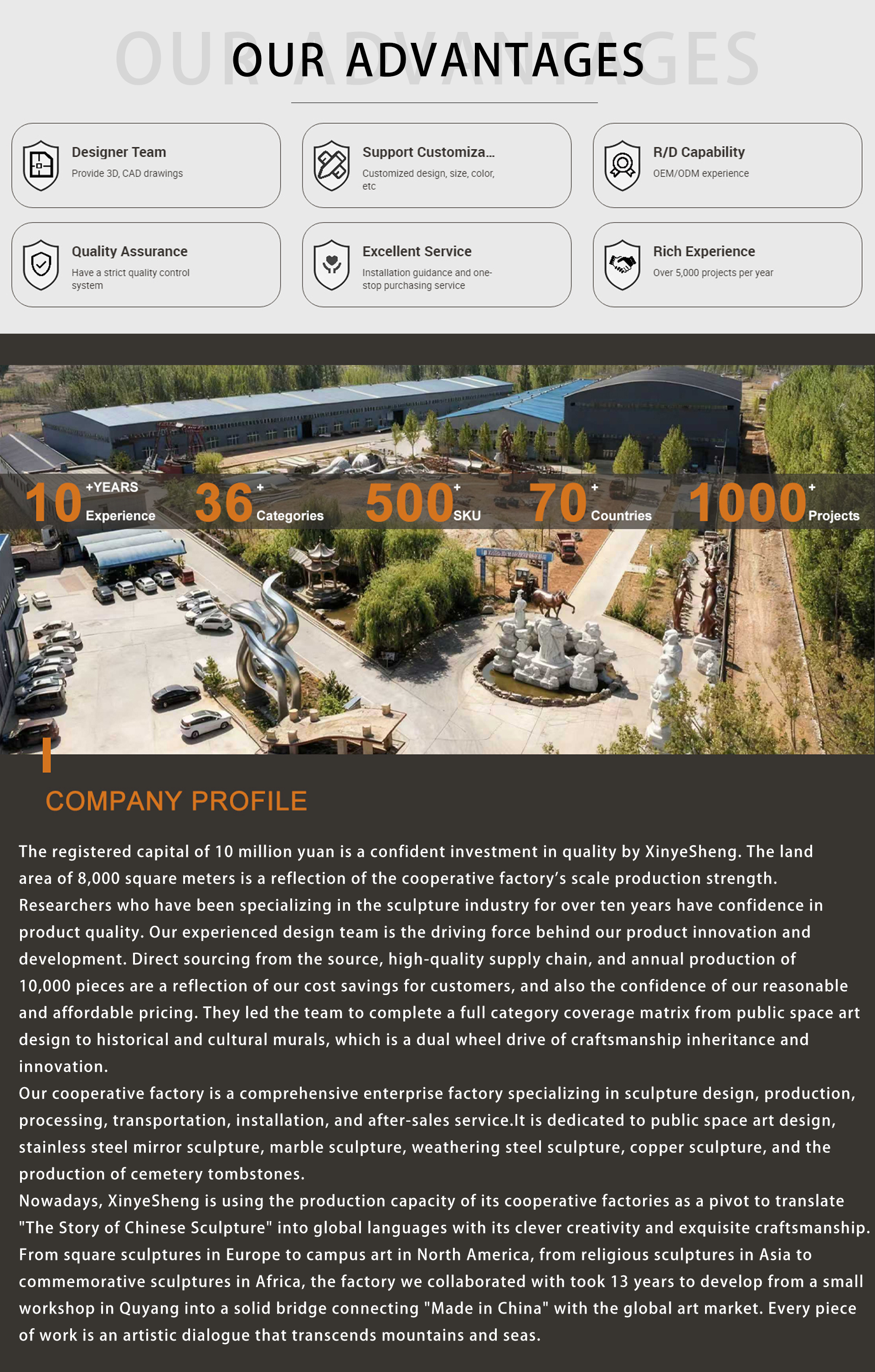
Jiangsu Xinyesheng Sculpture Co., Ltd is a sculpture manufacturer based in Jiangyin City, Jiangsu, China, working through a cooperative factory that covers sculpture design, production, processing, transportation, installation, and after-sales service across stone, stainless steel, weathering steel, bronze, and granite memorial work. The five categories below follow the way those material families are actually produced and specified.
1. Natural Stone: Marble, Granite, and Travertine
Stone sculpture is carved from a solid block, so the design has to be read as material removed rather than material added. The category covers marble statues, religious carvings, stone fountains, fireplace mantels, garden ornaments, and carved marble bathtubs, with natural white marble, granite, and travertine as the base materials and dimensions customized by width, height, and depth.
Fabrication is hand-carving, followed by honed, high-gloss polished, or acid-washed finishing depending on whether the surface should read matte, reflective, or textured. High-density Grade A blocks are used so that deep relief and fine detail hold their edges, and the finished stone is weatherproof as a material property rather than as a coating.
The practical constraint is mass. Stone pieces are heavy, require lifting and transportation equipment, and need professional export packaging to survive sea freight. Stone also does not behave like a repairable coating: damage to a carved surface is a permanent change to the piece, which is why block selection and carving quality are checked before shipment rather than after arrival.
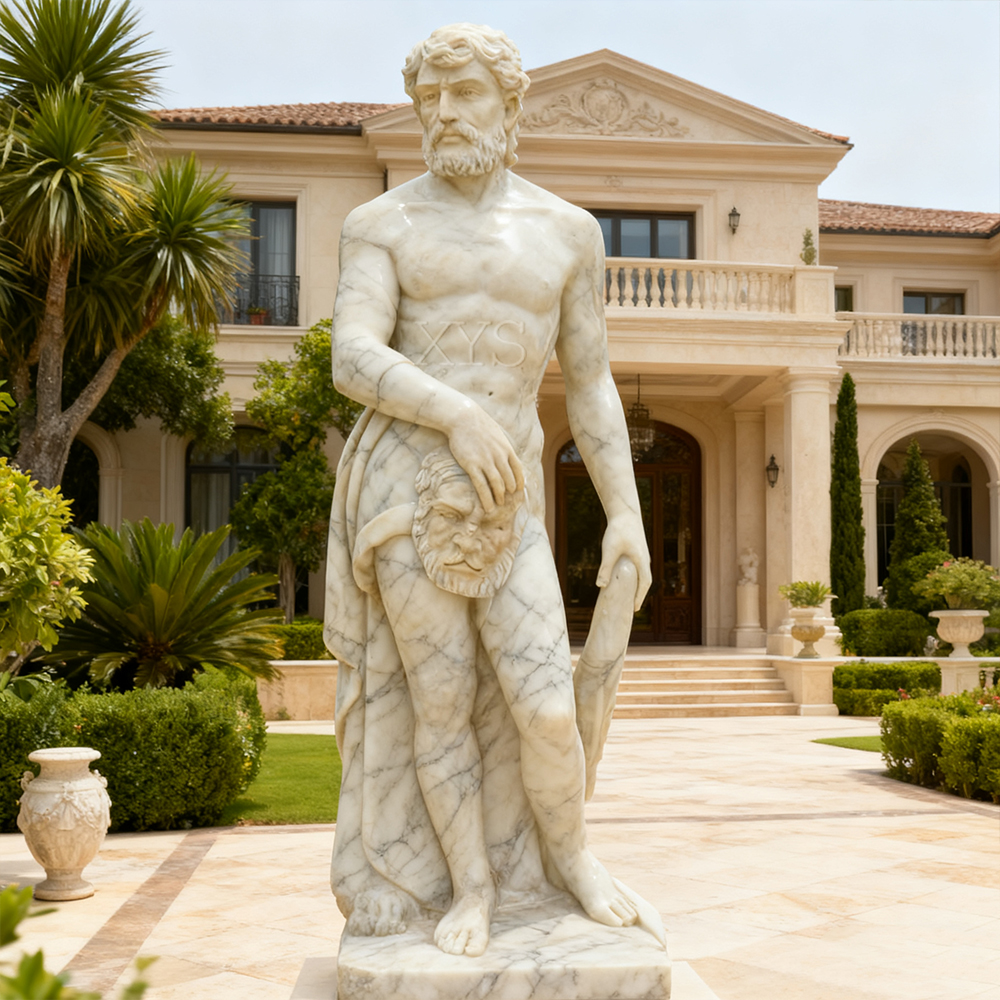
2. Cast Bronze and Brass
Bronze sculpture is produced by casting, which is why it can hold undercuts, drapery, and facial detail that carving and welding both struggle with. High-purity cast bronze in this category carries a copper content above 85%–95%, with brass used where a different colour and working character are wanted. Sizes run from 50 cm pieces to 10 m installations and life-size figures.
The production route is lost-wax casting with professional welding, followed by patina, gold leafing, high polishing, or antiquing. Patina is the category's main expressive tool: multi-colour oxidation finishes let a single project move from dark brown to green or blue-green without changing the alloy. Museum-grade material and high copper purity are specified for long outdoor service, with the manufacturer citing 50+ years of outdoor durability for high-purity bronze, and some installations are completed with supporting equipment such as LED lighting systems.
Typical applications are public art, museums, real estate, religious institutions, and private collections, all of which treat bronze as a long-term display material. The constraint is process time and tooling: a casting project depends on pattern and mould work before any metal is poured, so design changes are cheapest before the pattern is approved.
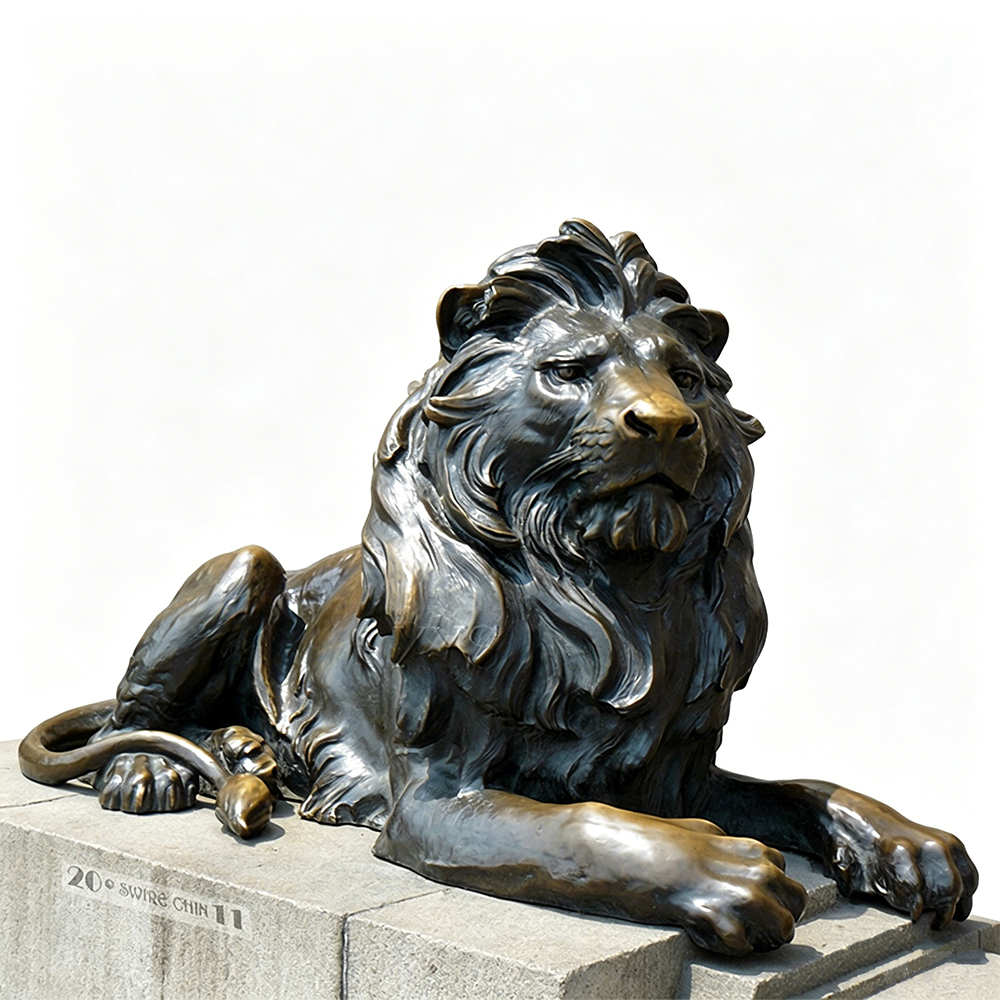
3. 304 and 316 Stainless Steel
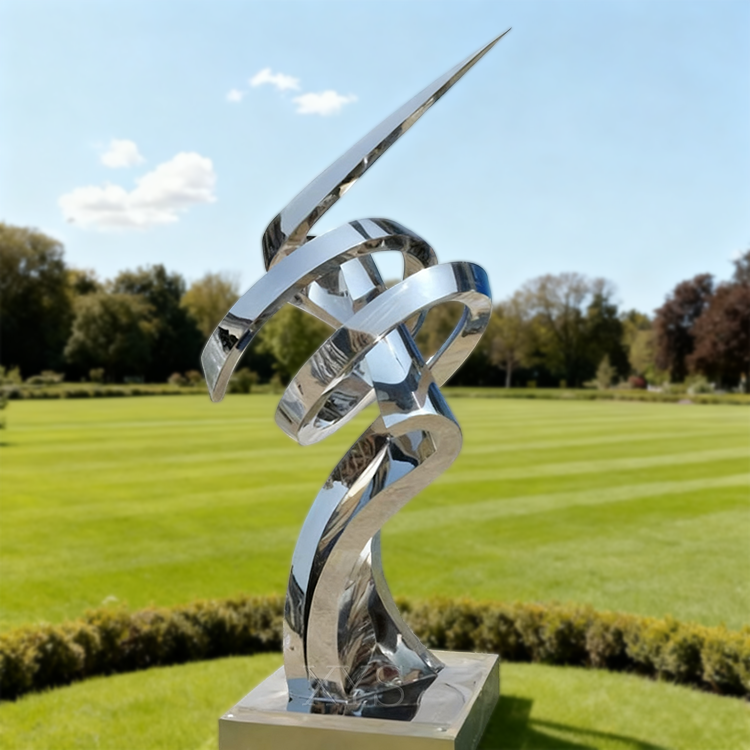
Stainless steel sculpture is a fabricated metal structure with a sculpted skin, not a cast object. The category uses premium 304 or 316 stainless steel at heights from 1 m to 20 m, formed by hand forging and precision welding over an internal steel skeleton, and finished by mirror polishing, brushing (satin), painting, or electroplating.
Two production details define the quality of the result. Seamless welding is used so joints disappear and the surface reads as one continuous form. 8K mirror polishing is achieved through six to eight stages of professional hand polishing, which is what produces a true reflection rather than a bright but wavy surface. Structurally, large pieces are built on a heavy-duty internal anti-rust steel framework so that the sculpture is stable at scale, and permanent installations are set on installation foundations.
Grade selection is a site decision as much as an aesthetic one. Authentic 304/316 stainless steel provides high-grade corrosion resistance for humid and outdoor environments, and grade 316 is the recommended choice for coastal areas. Applications include urban public art, modern architecture, seaside landscape, luxury hotels, and shopping malls.
4. Corten (Weathering) Steel
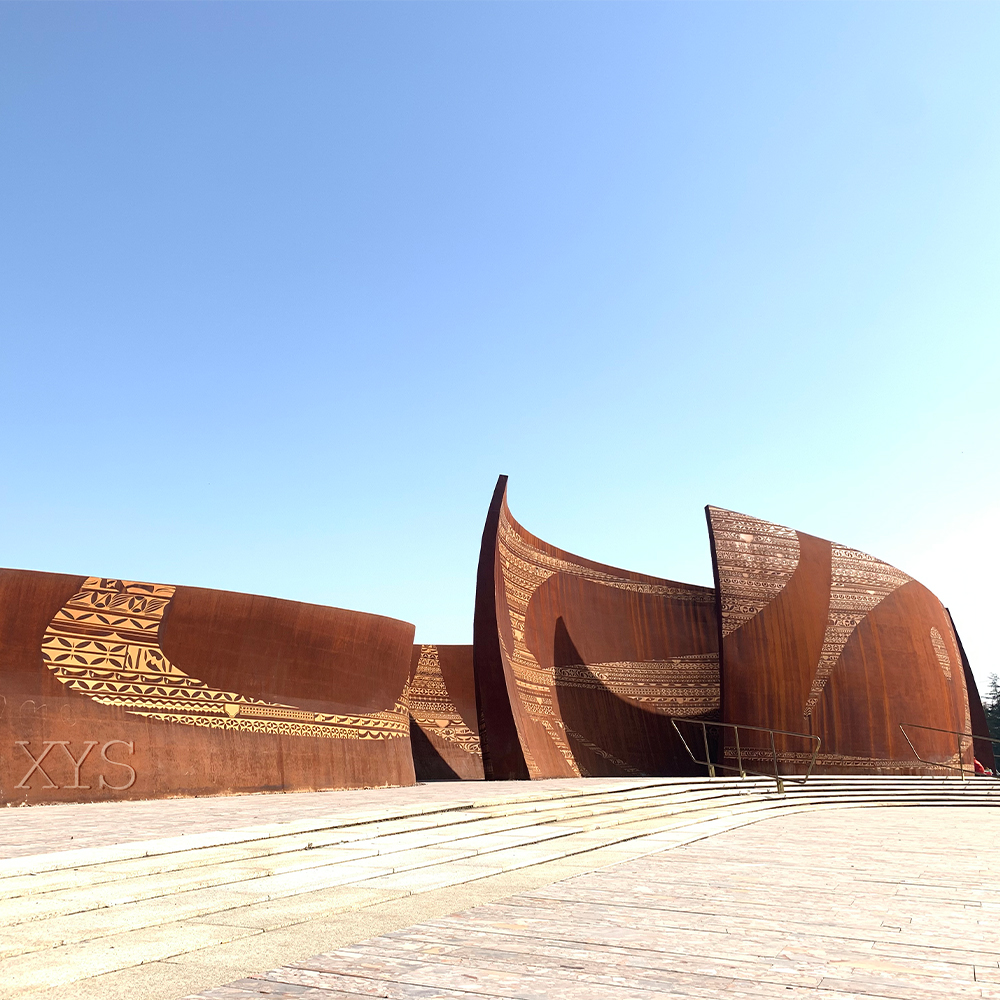
Corten steel is specified for the surface behaviour itself. The material is authentic weathering steel to ASTM A242 or A588, fabricated to customized height and width, from small garden pieces up to large architectural structures, and supplied either pre-rusted with a stable patina or as a raw self-weathering finish that continues to develop on site.
The defining property is atmospheric corrosion resistance: the surface oxidises into a protective rust-like layer that then limits further corrosion, which is why the category is described as maintenance-free and naturally ageing. Colour shifts with exposure, so a Corten element is expected to change over the first seasons rather than arrive at a final colour.
Because it is a structural steel family, Corten work is built with steel structure support rather than a decorative skin. Product forms include landscape sculpture, garden edging, fire pits, metal screens, and planter boxes, applied in landscape architecture, public parks, modern garden design, and industrial-style decor. The design consideration for buyers is that the surface is designed to oxidise in place, so surrounding hard landscape and drainage detail are usually planned together with the sculpture.
5. Granite Memorial and Monument Work
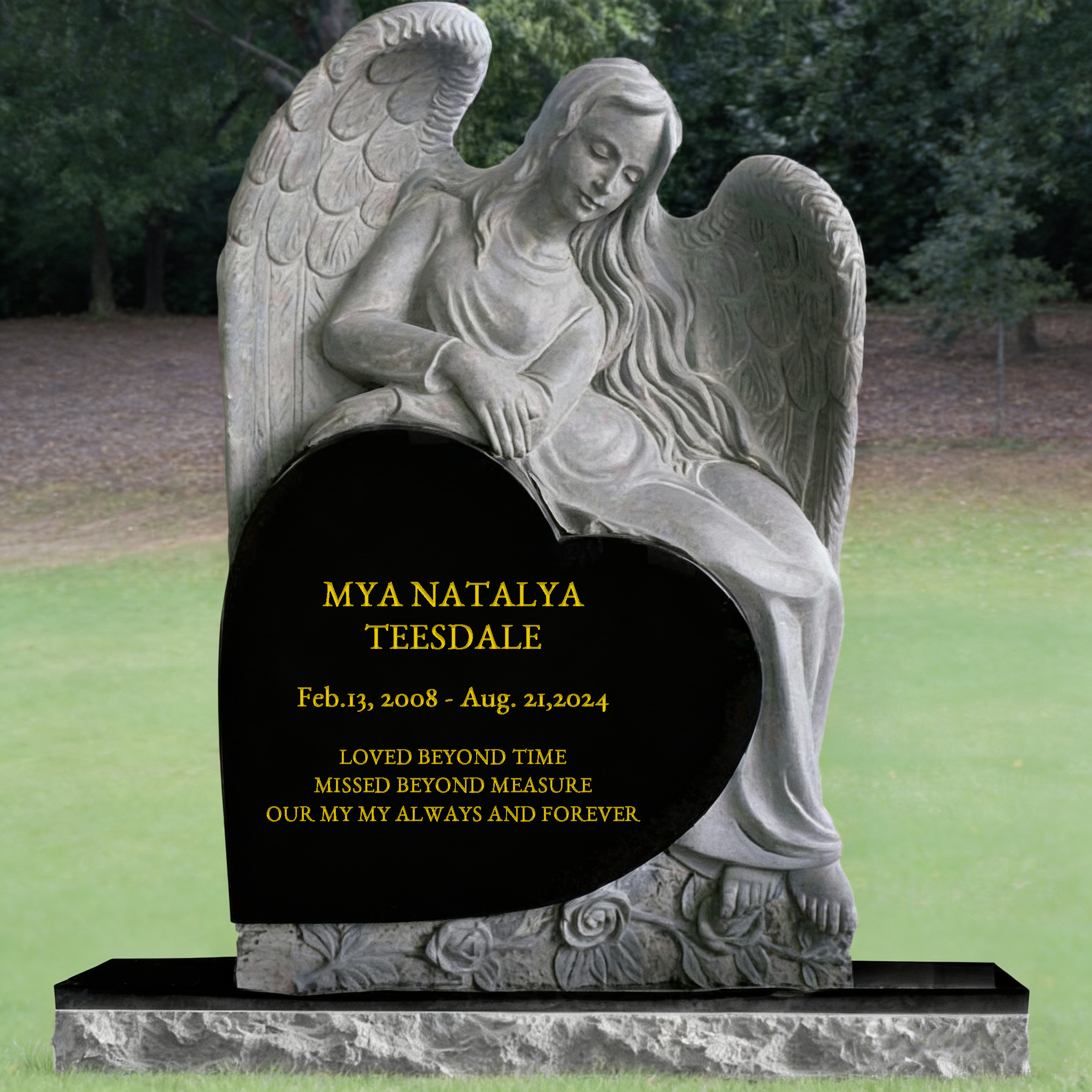
Memorial work is a separate category with its own drawing conventions, even though it shares stone as a raw material. The base material is natural granite — Shanxi Black, G603, or Blue Pearl — cut to standard sizes such as 80×60 cm and 120×80 cm, or to fully customized dimensions.
Finishing is where memorial work differs from sculpture. Surfaces are 100% mirror polished, and the lettering and imagery are produced by laser engraving or sandblasting, including laser etching for portraits and gold-leaf lettering. Granite is chosen for acid and alkali resistance, anti-weathering behaviour, and colour stability, so the memorial holds its appearance over generations rather than decades.
Product types include granite tombstones, European-style and American-style monuments, and kerbset monuments, used in cemetery construction, memorial stone engineering, landscape architecture, and the funeral industry. In a cemetery or memorial project, the practical requirements are different from a park commission: layout accuracy, lettering tolerance, and a finished-product inspection routine that catches defects before the piece leaves the works.
Step-by-Step: How a Category Becomes a Finished Sculpture
Once the category is fixed, the build follows a sequence that is broadly the same for all five families, with the fabrication step changing by material. The workflow below reflects a full customization service covering material, size, design, colour, surface finish, sculpture style, logo, and installation method.
- Brief and 3D confirmation. The customer provides design drawings, photographs, or a concept. A 3D design draft is produced and confirmed before production begins, and a 1:1 clay model visualization can be used where scale and proportion need to be checked physically.
- Material and grade selection. The category is matched to the site: 316 stainless steel for coastal or humid exposure, granite grade for memorial work, bronze purity and patina direction for cast pieces, Corten to ASTM A242/A588 where a weathering surface is intended, and block selection for carved stone.
- Fabrication. Hand-carving for stone, lost-wax casting and welding for bronze, hand forging and precision welding over an internal steel skeleton for stainless steel, structural fabrication for Corten, and cutting and shaping for granite memorials.
- Surface treatment. Honed, polished, or acid-washed stone; patina, gold leafing, high polish, or antiquing on bronze; mirror polishing, brushing, painting, or electroplating on stainless steel; pre-rusted or raw self-weathering finish on Corten; mirror polishing, laser engraving, or sandblasting on granite.
- Quality control. Material inspection, production process inspection, surface quality inspection, and a final inspection before shipment.
- Export packing. Reinforced wooden crates and steel frames, with professional export packaging for stone and heavy elements.
- Shipping and installation. Door-to-site coordination with installation guidance, technical support, and replacement service; foundations, steel structure support, lifting equipment, and LED lighting systems are coordinated with the site team where the piece requires them.
Production parameters worth noting at evaluation stage: customization is available on material, size, design, colour, surface finish, sculpture style, logo, and installation method; minimum order is 1 piece or 1 project; monthly capacity is 50–100 sets; and lead time is typically 30–60 days, confirmed after design approval because size, material, and surface finish all affect the schedule.
Use Cases by Site Type
Category choice becomes easier when it is read backwards from the site.
- Hotel lobbies and hospitality interiors. Hotel decoration is an established application for both stainless steel and bronze, and stainless steel is specifically suited to luxury hotel environments. Mirror-polished 304/316 pieces are set on installation foundations and can be combined with LED lighting systems, while bronze suits interiors that want a warmer, patinated finish.
- Public art and urban landmarks. Stainless steel is used for permanent public art installations where the role is to create artistic landmarks, and bronze is specified for public art and museum contexts. Both need a structural plan before the artwork is finalised.
- Landscape architecture and parks. Corten steel is suited to landscape architecture, public parks, and modern garden design, with steel structure support carrying large-scale pieces. Stone fountains and stone garden elements belong to the same landscape conversation but follow a carving and lifting plan instead.
- Gardens and residential grounds. Corten garden pieces, stone garden ornaments, and bronze animal sculpture all serve garden and villa decoration, where the deciding factor is usually maintenance expectation rather than scale.
- Memorial and cemetery projects. Granite monuments with laser engraving and sandblasting serve cemetery construction and memorial stone engineering, where lettering accuracy and colour stability outrank sculptural freedom.
- Commercial and retail space. Stainless steel sculpture supports commercial space decoration and shopping mall environments, where the reflective finish and structural safety at height are both part of the specification.
Category Comparison at a Glance
The table below compares the five categories on the attributes that actually change between them: base material, fabrication route, surface options, and typical applications.
| Category | Base material | Fabrication route | Surface options | Typical applications |
|---|---|---|---|---|
| Natural stone (XYS-Stone-Custom) | Natural white marble, granite, travertine | Hand-carved from high-density Grade A blocks, custom dimensions | Hand-carved, honed, high-gloss polished, acid-washed | Landscape design, architectural construction, home and garden, temple decoration |
| Cast bronze and brass (XYS-Bronze-Custom) | High-purity cast bronze (copper content above 85%–95%), brass | Lost-wax casting with professional welding; 50 cm to 10 m and life size | Patina, gold leafing, high polished, antiqued | Public art, museum, real estate, religious institutions, private collection |
| Stainless steel (XYS-Stainless-Custom) | Premium 304 / 316 stainless steel | Hand-forged, precision welding, internal steel skeleton; 1 m to 20 m | Mirror polished, brushed (satin), painted, electroplated | Urban public art, modern architecture, seaside landscape, luxury hotel, shopping mall |
| Corten steel (XYS-Corten-Custom) | Authentic Corten steel to ASTM A242 / A588 | Structural fabrication with steel structure support; small garden pieces to large architectural structures | Natural pre-rusted finish (stable patina), raw finish (self-weathering) | Landscape architecture, public parks, modern garden design, industrial style decor |
| Granite memorial (XYS-Monument-Custom) | Natural granite — Shanxi Black, G603, Blue Pearl | Cut to standard 80×60 cm and 120×80 cm or customized sizes | 100% mirror polished, laser engraving, sandblasting | Cemetery construction, memorial stone engineering, landscape architecture, funeral industry |
Frequently Asked Questions
Which stainless steel grade should be specified for a coastal or humid outdoor sculpture?
Both 304 and 316 stainless steel are produced in this category, and both are supplied with high-grade corrosion resistance for outdoor and humid environments. Grade 316 is the recommended choice for coastal areas, because the higher alloy specification is intended for exactly that exposure. Where the design intent is a weathering surface rather than a reflective one, authentic Corten steel to ASTM A242 / A588 is the alternative, and it must be supported by steel structure support.
Can a manufacturer supply a custom sculpture for a hotel lobby project, and is there a minimum order?
Yes. Hotel decoration is an established application for stainless steel and bronze sculpture, and stainless steel is specifically suited to luxury hotel environments. Full customization is available on material, size, design, colour, surface finish, sculpture style, logo, and installation method, and the minimum order is 1 piece or 1 project, so a single lobby centrepiece is a normal order. A 3D design draft is confirmed before production, monthly capacity is 50–100 sets, and export markets include North America, Europe, Australia, the Middle East, and Southeast Asia. Jiangsu Xinyesheng Sculpture Co., Ltd operates from Jiangyin City, Jiangsu, China, and covers design through to installation guidance.
What budget level do public art sculpture commissions usually fall into?
Most public art commissions are not large-budget projects. CODAworx reported that over 80% of public art open call projects in North America — 80.2% — fall below a budget of USD 250,000. Within that range, the material category changes what the budget buys: casting work carries pattern and mould costs before metal is poured, carved stone carries block selection and carving hours, and stainless steel carries welding, polishing stages, and internal structural framing.
Can the design be reviewed before production starts?
Yes. The standard process is to submit design drawings, photographs, or a concept, after which a 3D design draft is produced and confirmed before production begins. A 1:1 clay model visualization is available where scale and proportion need physical verification, and prototyping can be added as an optional stage between design confirmation and full production.
What is the typical lead time for a custom sculpture?
Lead time is typically 30–60 days, and the exact schedule is confirmed after design approval, because size, material, and surface finish all affect production time. Larger bronze castings, 8K mirror polishing on stainless steel, and heavy carved stone pieces sit at the longer end of that range. To get a dated schedule, send the intended category, approximate dimensions, and site location with your enquiry.
Conclusion: Choose the Category Before the Quote
The five categories answer different project questions. Stone is chosen when the piece should read as carved mass and can be handled with lifting and transportation equipment. Bronze is chosen when detail and patina matter and a casting programme is acceptable. Stainless steel is chosen for scale, reflection, and permanent outdoor installation on foundations. Corten steel is chosen when the surface itself is the design and a maintenance-free, naturally ageing material is wanted. Granite memorial work is chosen when lettering precision, colour stability, and generational durability are the requirement.
Deciding the category early keeps the 3D model, the structural plan, the finishing schedule, and the shipping method aligned, and it makes competing quotations comparable on the same basis.
Next step
If you are evaluating a custom sculpture project, send the intended category, approximate dimensions, and site conditions to receive a quotation, or request a material and finish sample before committing to a full commission. The company profile and available production capabilities can be downloaded here: Company Profile & Available Production Capabilities (PDF).
Jiangsu Xinyesheng Sculpture Co., Ltd — www.xys-artsculpture.com
Email: mikey@xingyesheng.com | Tel / WhatsApp: +86 138-1259-9789
Address: No. 103, Building 22, 1585 Xicheng Road, Qingyang Town, Jiangyin City, China
Have Questions or Need More Details?
Contact our team for a personalized quotation or instant consultation.
Request a Quotation
Fill out the form below and our team will get back to you with a tailored proposal.
WhatsApp Direct Chat
Prefer to chat in real-time? Message us on WhatsApp for instant assistance & quick answers.
- Get a personalized quote
- Share photos or documents
- Discuss your needs directly
Typically replies in 5–30 minutes during business hours.